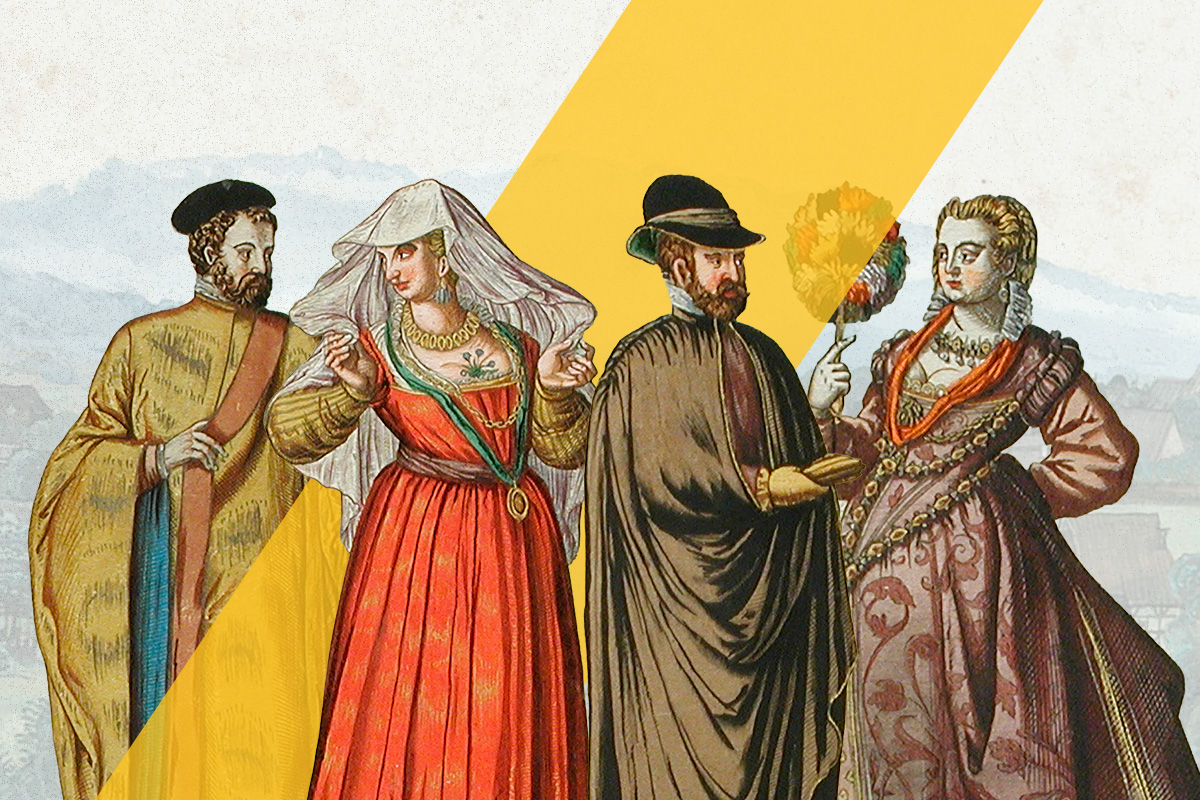

Costume of the Italian Peninsula, 1581
A journey through the clothing of the Italian peninsula at the end of the 16th century — from Rome and Venice to Padua, Florence, Siena, Milan, Bologna, Ferrara and Pisa.
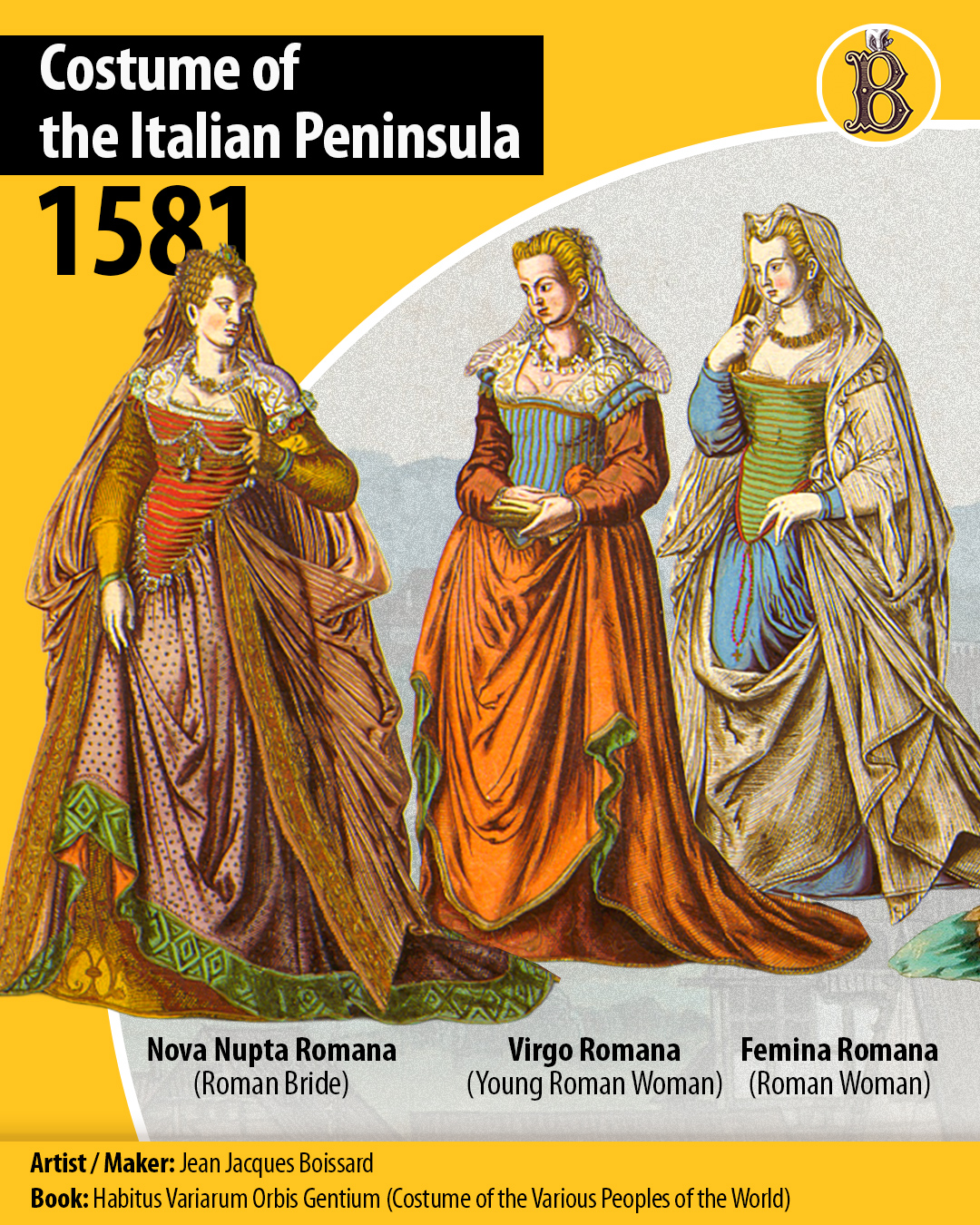
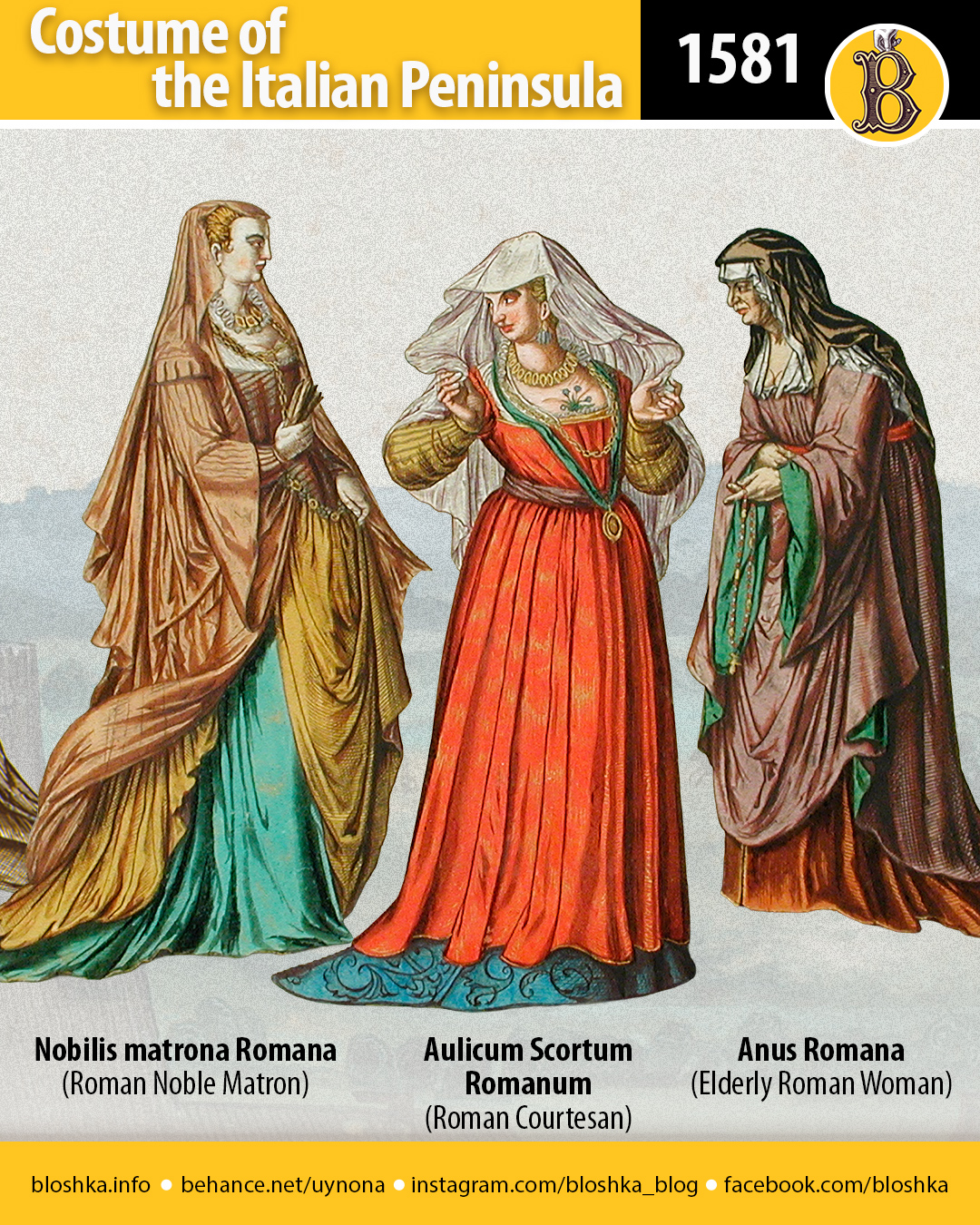
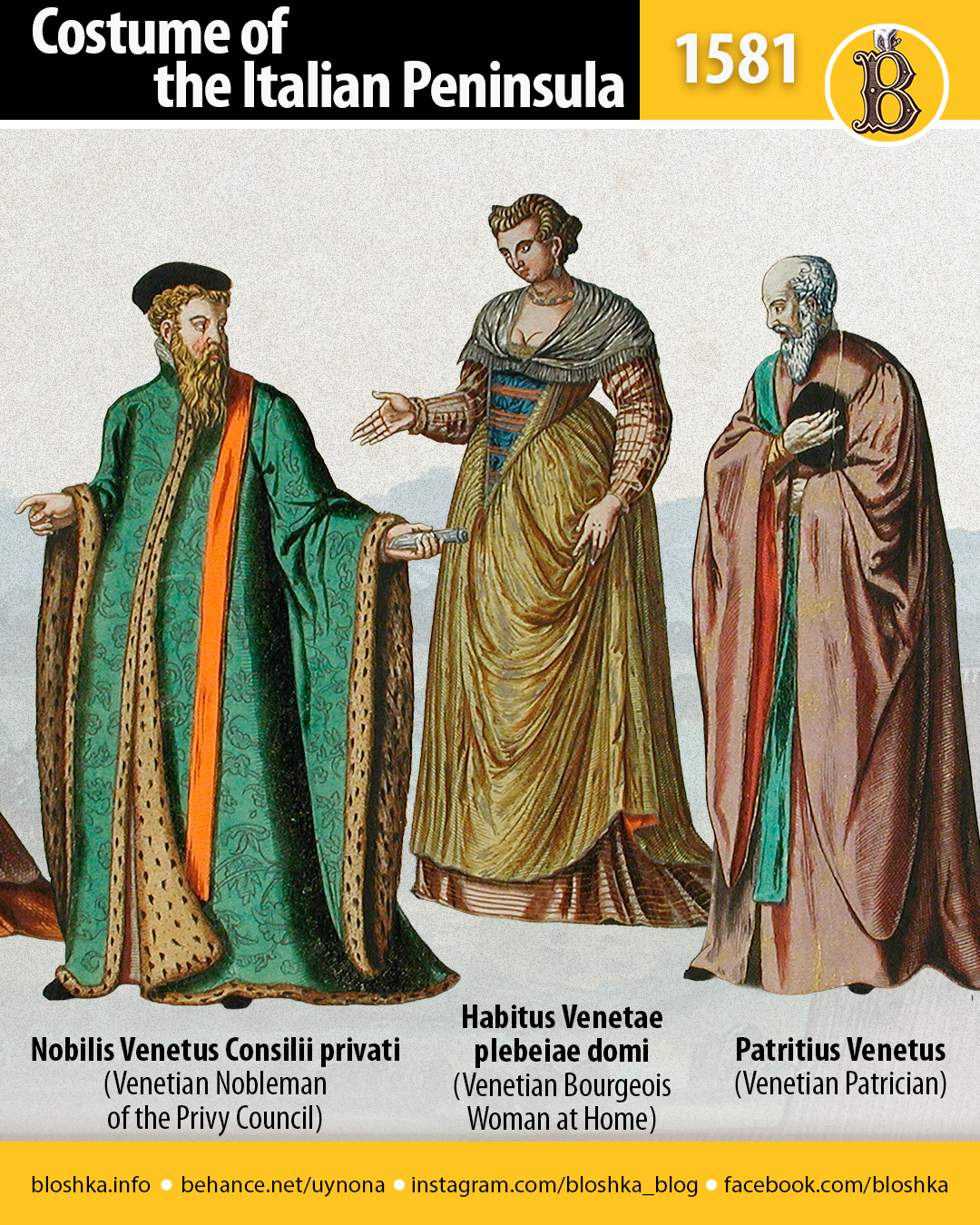
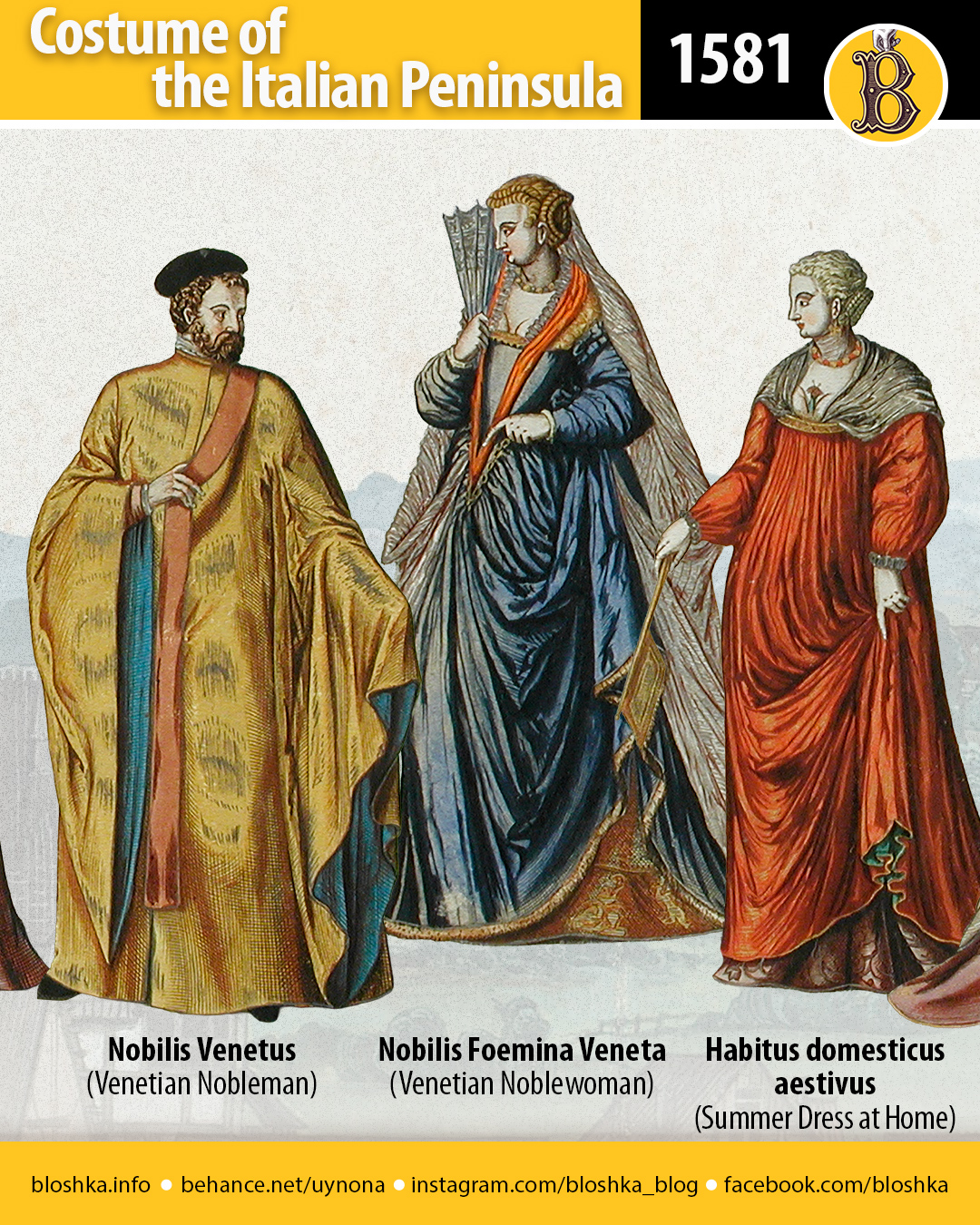
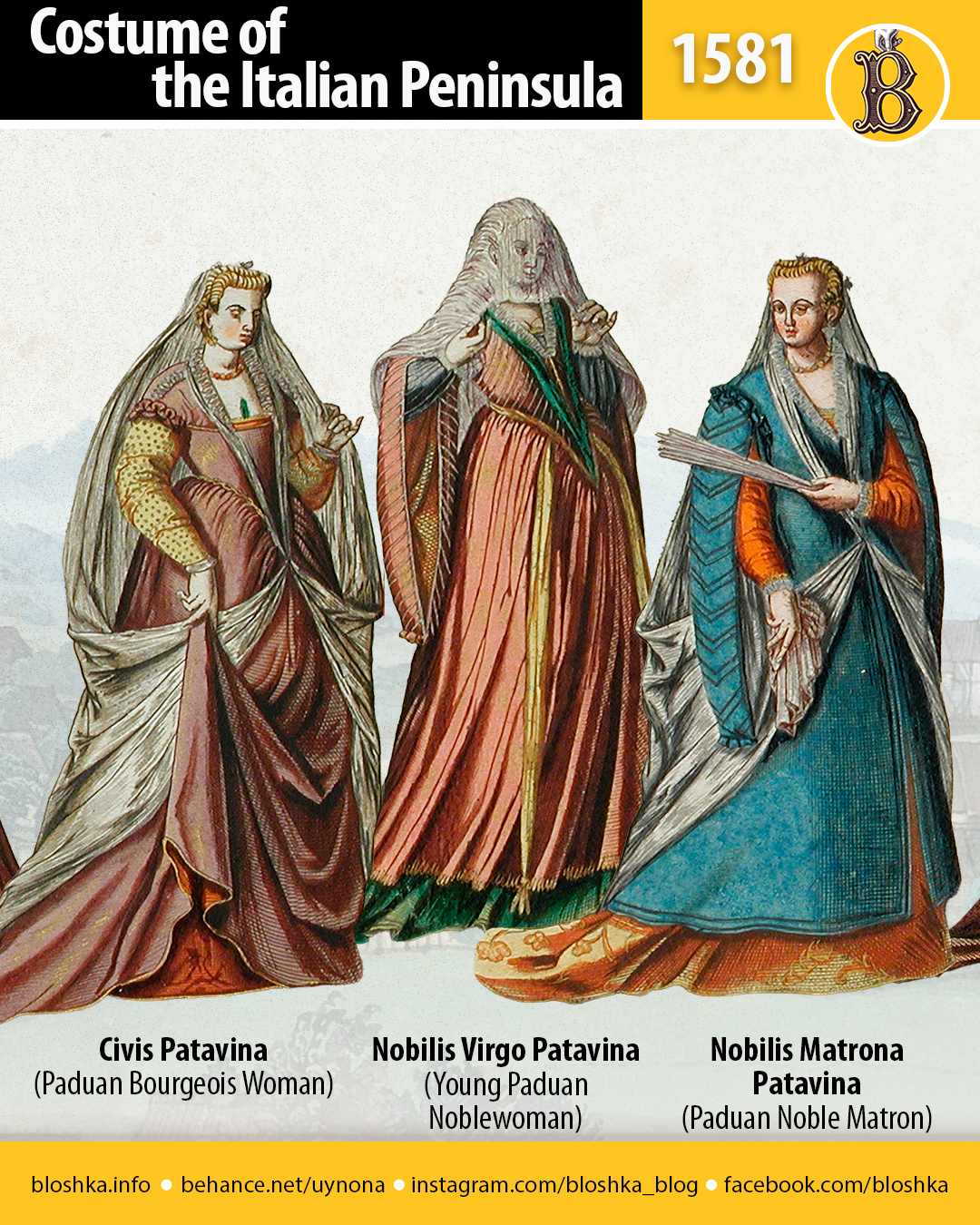
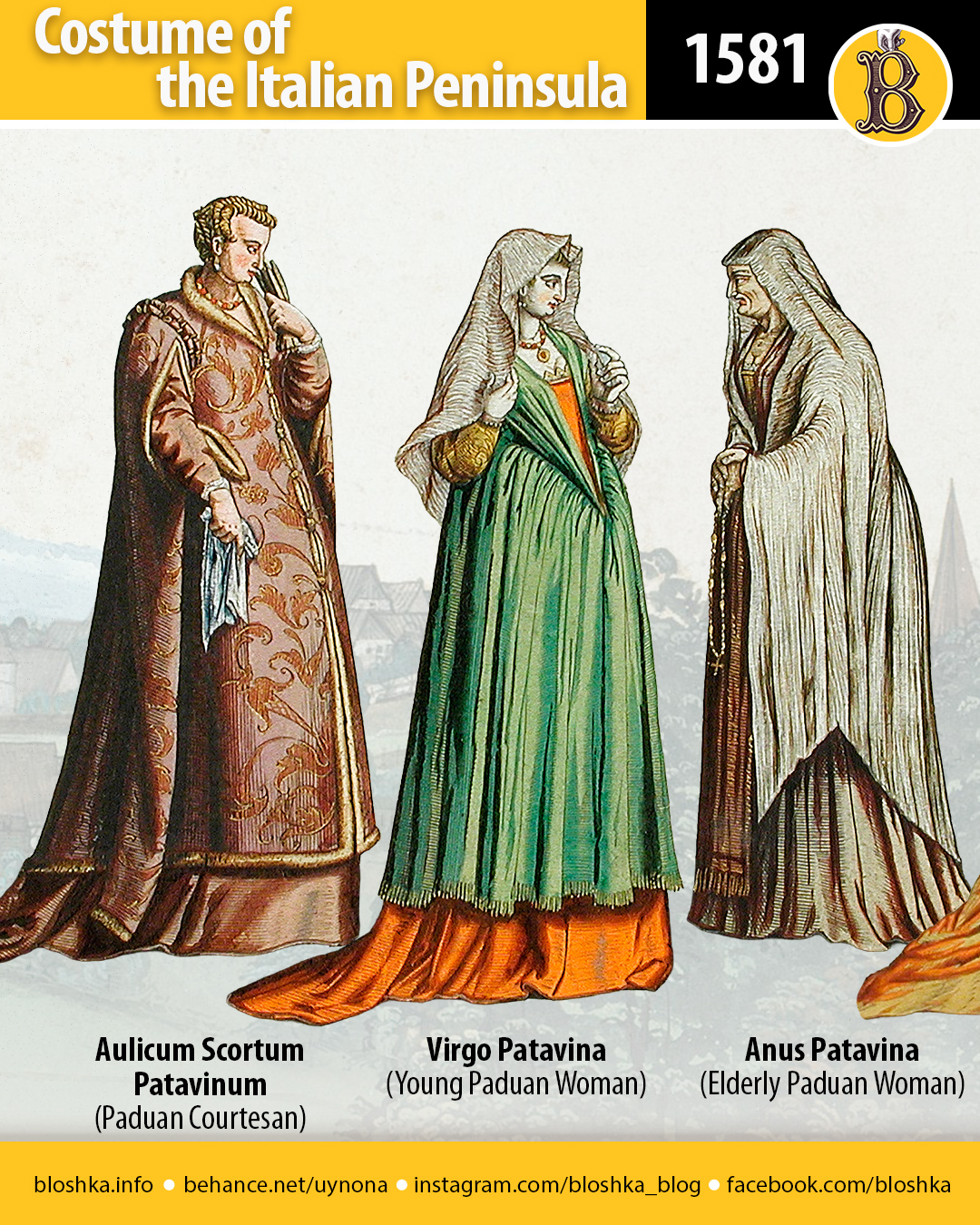
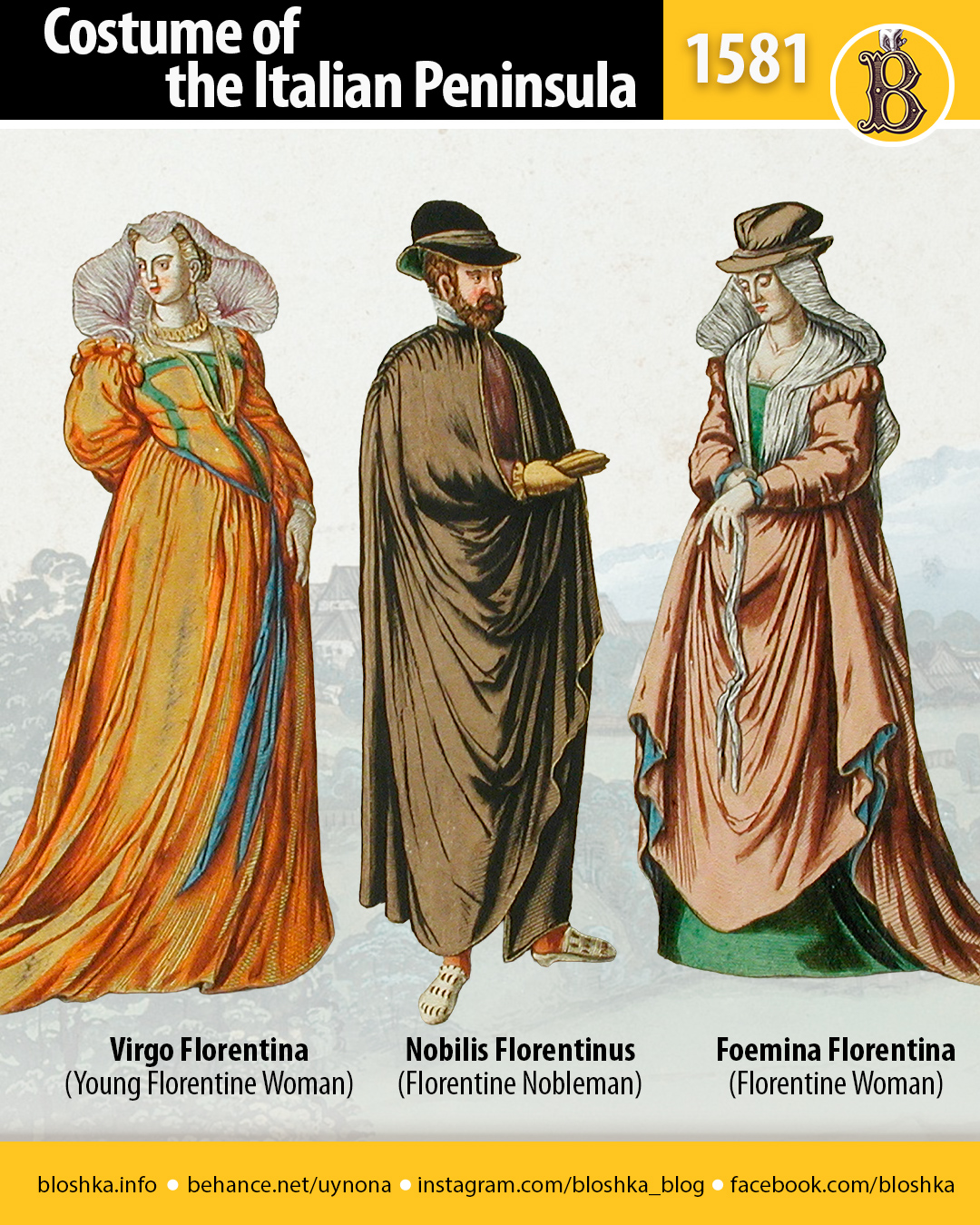
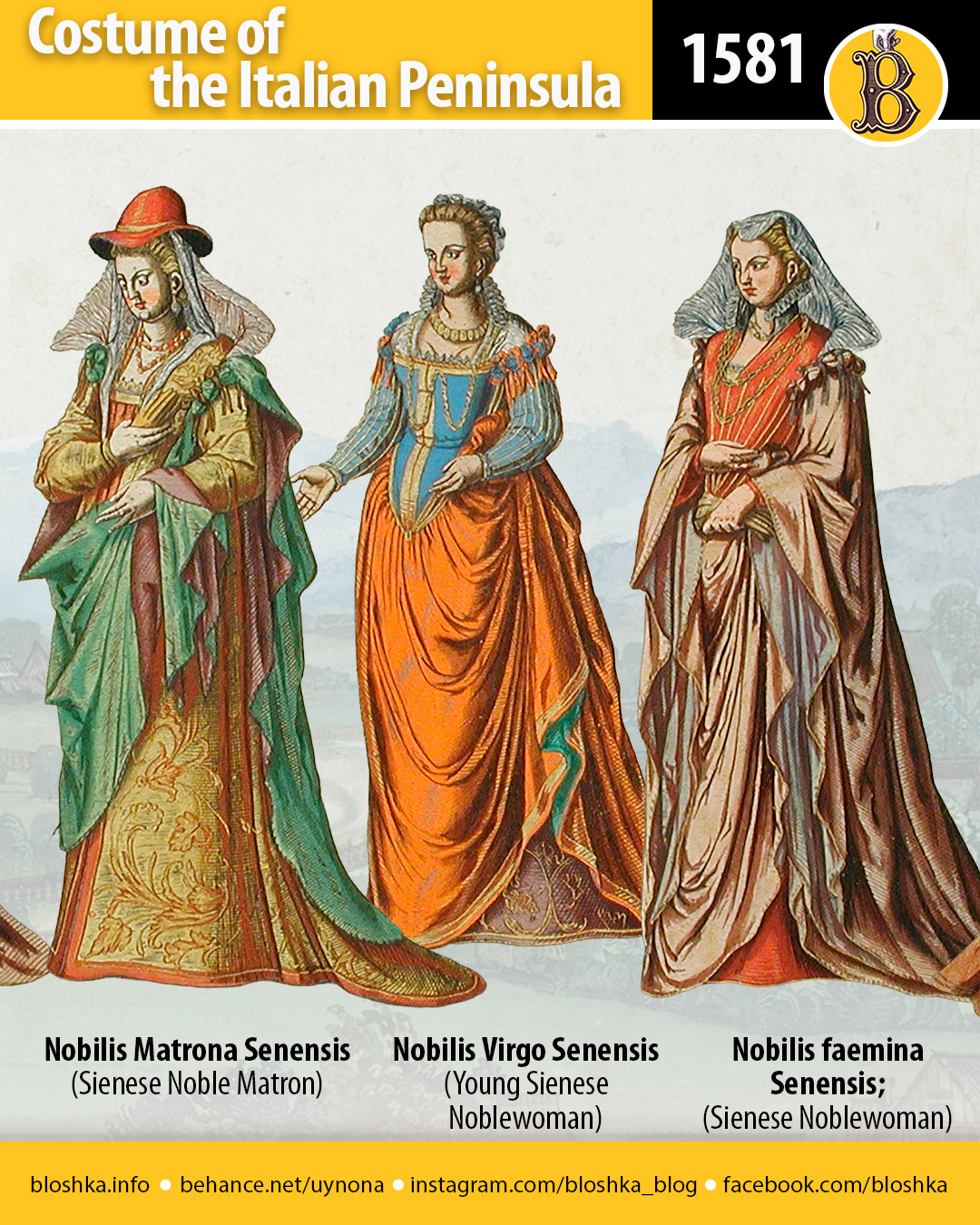
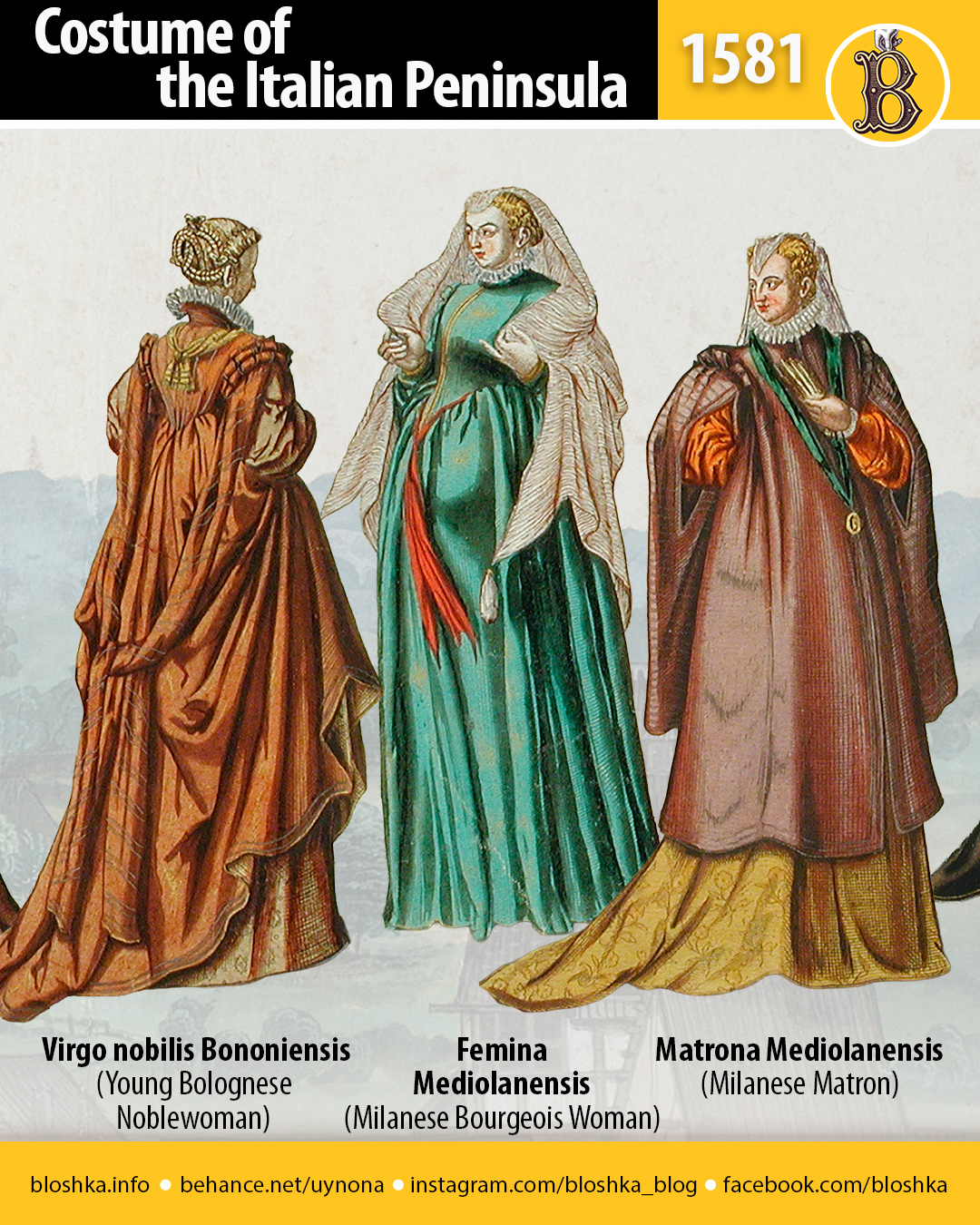
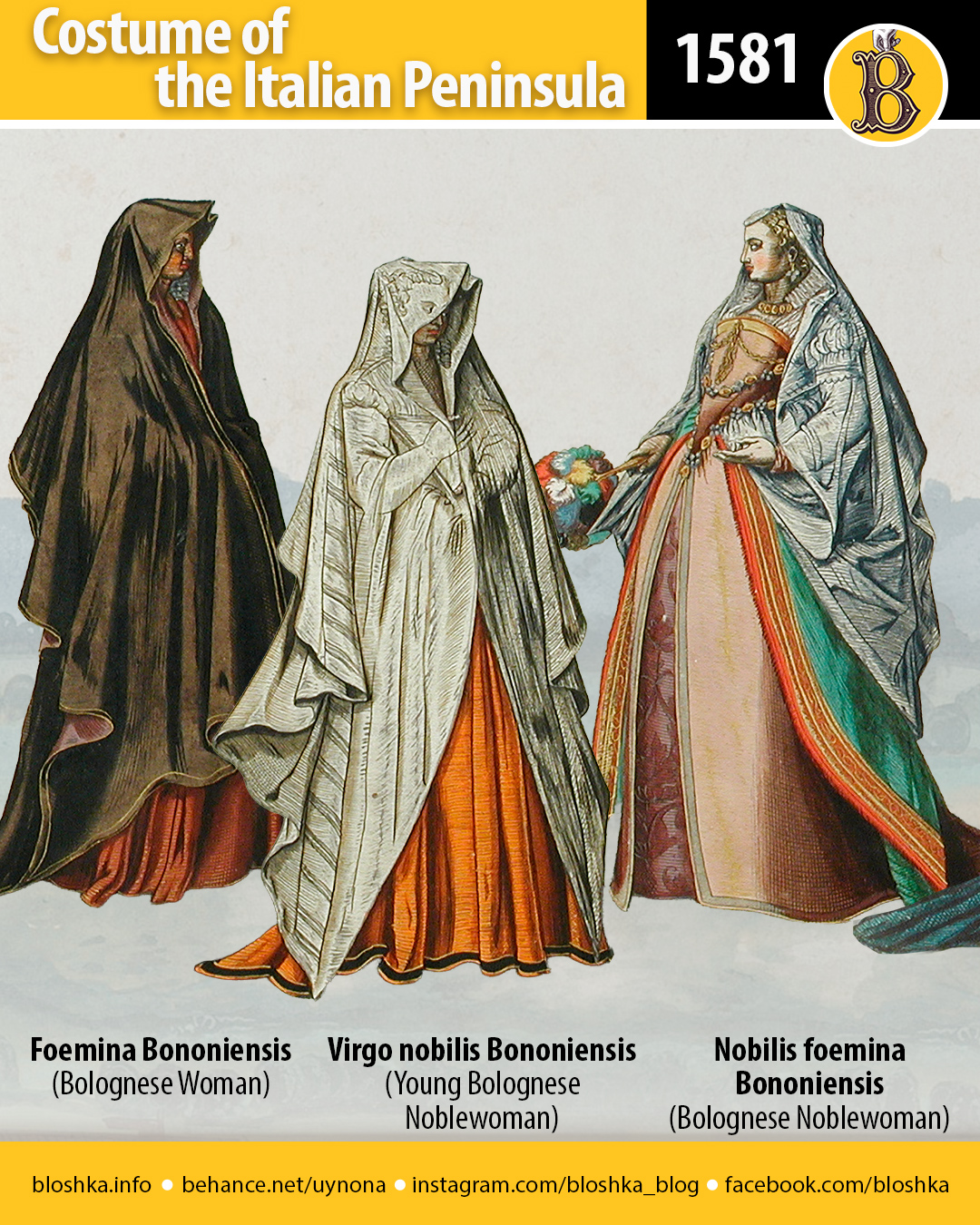
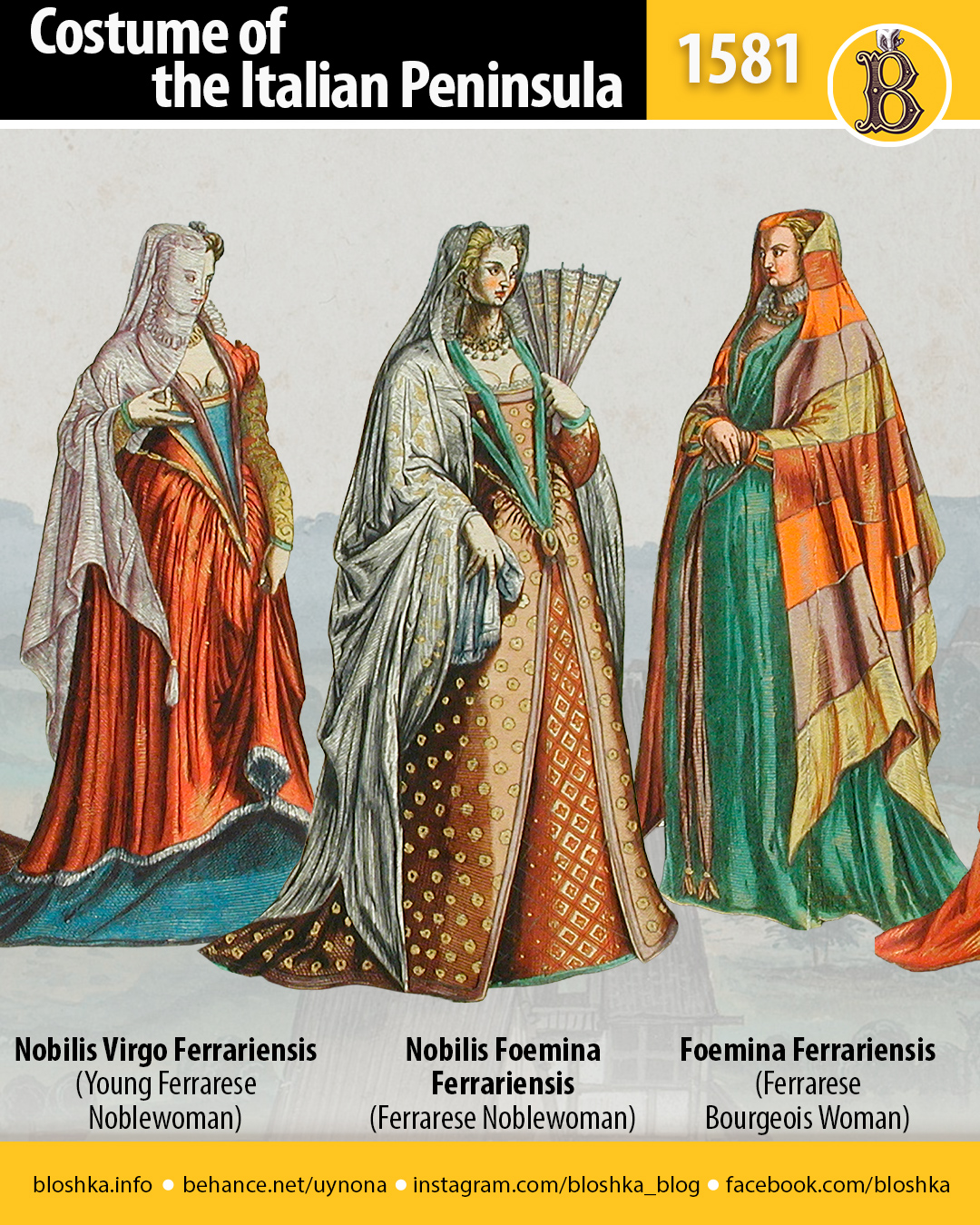
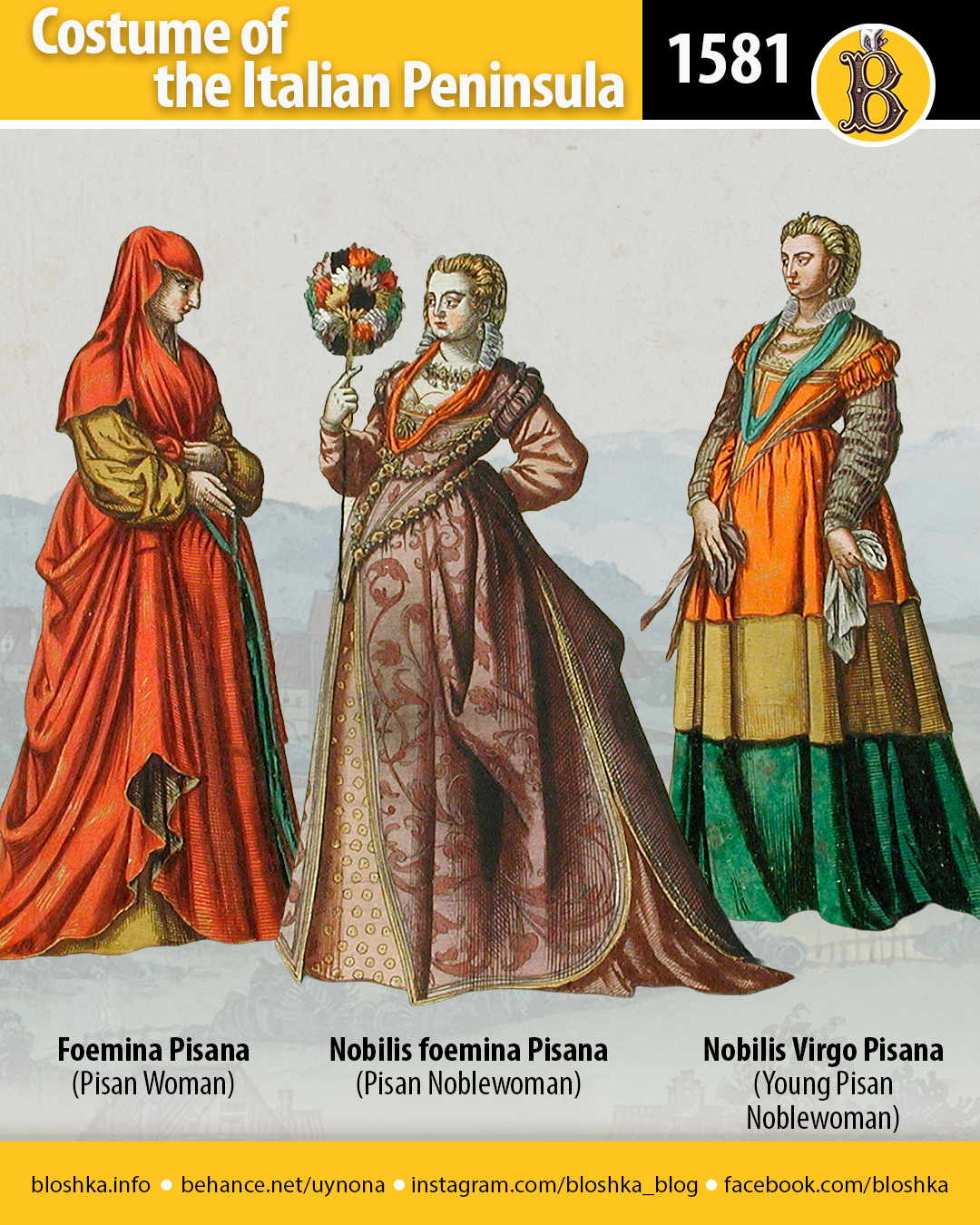
These figures come from Jean Jacques Boissard’s Habitus Variarum Orbis Gentium (Costume of the Various Peoples of the World), published in 1581. The book presents men and women from different cities, social ranks and stages of life: noblewomen and patricians, brides and unmarried women, bourgeois women, courtesans, matrons and elderly women.
What makes this series especially fascinating is the opportunity to compare regional differences. Although the figures share many features of late 16th-century European dress, their clothing, veils, hairstyles, sleeves, jewellery and ways of arranging gowns vary noticeably from city to city.
As with other early costume books, these images should not be treated as strictly documentary records of everyday dress. They show contemporary ideas about regional and social identity as interpreted and organised by the artist. Nevertheless, they remain an extraordinary visual source for studying how people in the late Renaissance imagined and represented the diversity of dress across the Italian peninsula.
I have kept the original Latin titles of the figures, with English translations beneath them.
Artist / Maker: Jean Jacques Boissard
Habitus Variarum Orbis Gentium (Costume of the Various Peoples of the World), 1581