Regional Dress of Iberia, 1572
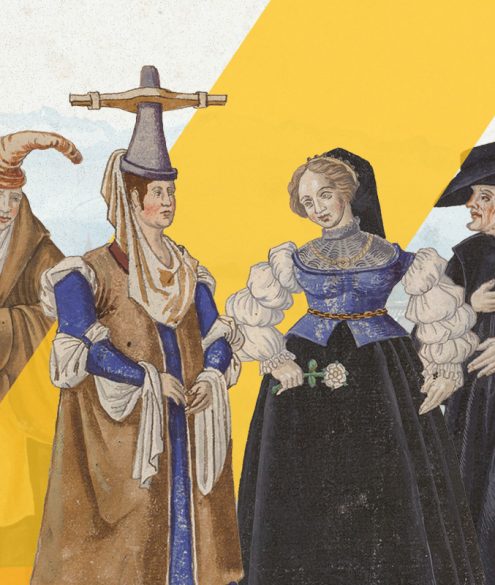
Regional Dress of Iberia and Neighboring Regions, 1572 What did people wear in different regions of the Iberian Peninsula in the late 16th century?

Tag
Regional Dress of Iberia and Neighboring Regions, 1572 What did people wear in different regions of the Iberian Peninsula in the late 16th century?
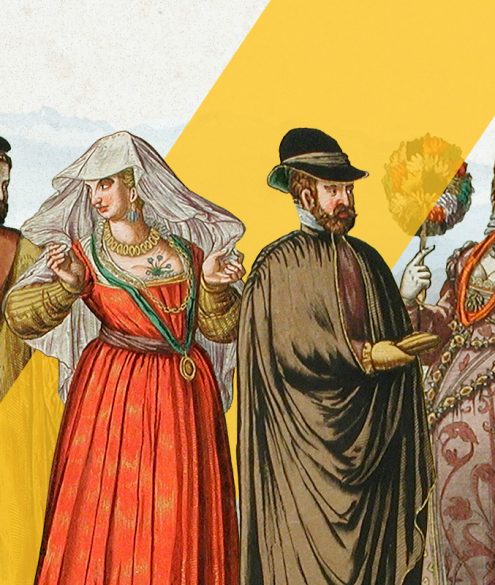
A journey through the clothing of the Italian peninsula at the end of the 16th century — from Rome and Venice to Padua, Florence, Siena, Milan, Bologna, Ferrara and Pisa.
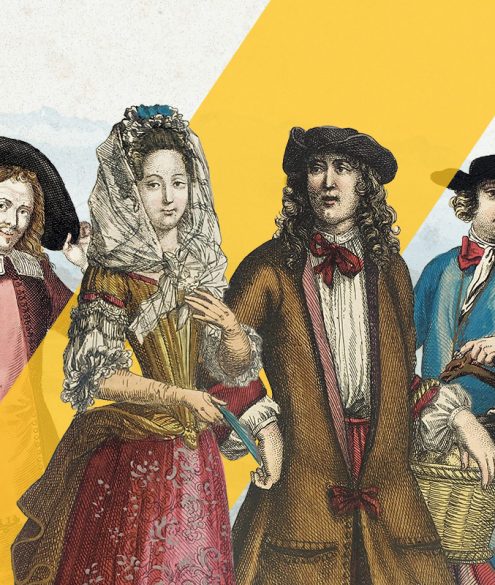
Fashion across social ranks in late 17th-century France By popular request, here is a look at how people from different social backgrounds were represented in late 17th-century France — from men and women of quality to peasants, shepherds, tradespeople, street vendors, a midwife, a financier and members of the clergy.
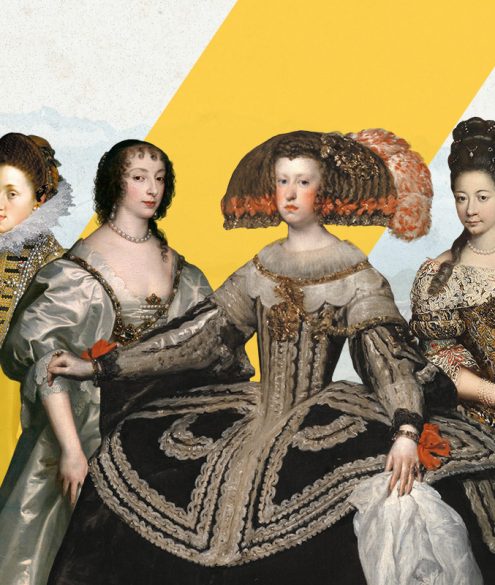
Women’s fashion through the 17th century The 17th century brought major changes to women’s dress, from the rigid and highly structured silhouettes of the late Renaissance to the softer, more fluid fashions of the mid-century, and finally to the elaborate court styles of the late 1600s.
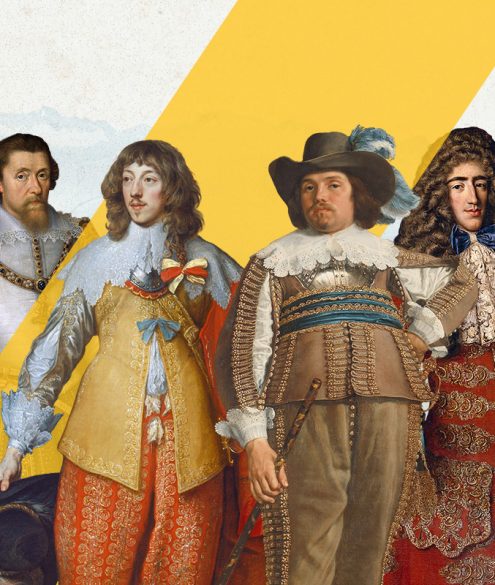
A century of dramatic changes in silhouette, proportion and decoration. At the beginning of the 1600s, men’s dress still carried many features of the late Renaissance:
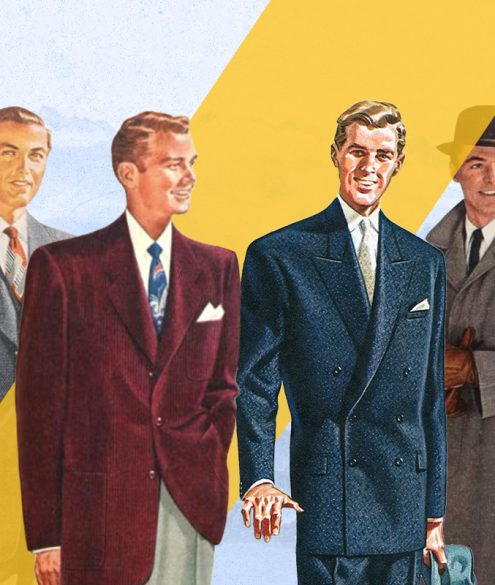
Men’s fashion through the years: 1950–1959 The 1950s marked a shift from the restrained practicality of the war years toward a more polished, prosperous and increasingly varied approach to menswear.

Men’s fashion through the years: 1940–1949 The 1940s were a decade of dramatic change, and men’s fashion reflected both the restrictions of wartime and the renewed optimism that followed.

Men’s fashion through the years: 1930–1939 The 1930s brought a return to a stronger, more structured masculine silhouette. Jackets became broader through the shoulders, waists were more defined, and trousers were cut high and full, creating the elegant proportions associated with the decade.

Men’s fashion through the years: 1920–1929. A year-by-year timeline of men’s style during a decade shaped by postwar change, modern leisure, and the growing influence of youth culture.

Men’s fashion through the years: 1910–1919. A year-by-year timeline of men’s style during a decade shaped by elegance, modern life, and the First World War.

Burgundian fashion refers to the courtly fashion trends of the Burgundian court in the European culture of the Late Middle Ages.

Punk is often explained through ideology, music, political slogans, or debates about who is a “real punk” and who is simply copying the look.

European — mostly European — costume of the 1570s in drawings by Lucas de Heere, also known as Lucas d’Heere (1534–1584).

Men’s and women’s fashion through the years: 1850–1859. Exploring the graceful silhouettes and romantic elegance of mid-19th-century fashion, inspired by authentic illustrations and engravings of the era.

Men’s and Women’s fashion through the years: 1830–1839. A look at the style of the first half of the 19th century, inspired by authentic fashion illustrations and engravings of the era.

The exact origins of golf are unknown. One of the early documented references appears in a decree from 1360, in which the magistrates of Brussels prohibited the game of colven within the city walls.

Women’s and Men’s Fashion through the years: 1820–1829. A glimpse into early 19th-century style, inspired by authentic fashion plates and engravings of the era.

The Tudor bonnet, also known as the Renaissance flat cap or Renaissance bonnet, and sometimes simply (though inaccurately) called a “beret,” was a popular head covering in Renaissance Europe.

Women’s and Men’s Fashion through the years: 1800–1809. A glimpse into early 19th-century style, inspired by authentic fashion plates and engravings of the era.

Baby rattle (rock crystal, coral and bells) is an accessory for infants that combined several functions: a rattle, a teether, sometimes a pacifier, quite often a whistle, and it also served as a protective charm.

Ice skating was already known in Europe during the Middle Ages: written sources from the 12th–14th centuries mention movement and leisure on ice.

A pudding cap is a child’s head protector. A baby bumper headguard cap, also known as a falling cap or pudding hat, is a protective head covering worn by children who are learning to sit, crawl, or walk.

In the 1910s, women’s skirts became shorter, and by the 1920s the sight of bare female legs no longer surprised anyone.

Fashion through the years: 1850–1899. Five decades of evolving 19th-century elegance, inspired by authentic illustrations and engravings of the era. Exploring the transformation of mid-19th-century style—from voluminous crinolines to the S-shaped silhouettes of Art Nouveau..

Fashion through the years: 1800–1849. Five decades of evolving 19th-century elegance, inspired by authentic illustrations and engravings of the era. Exploring the transformation of early 19th-century style — from Empire grace to Victorian romance.

A 2026 wall calendar dedicated to 19th-century fashion — from the 1800s to the 1890s, including women’s lingerie and bridal styles.

From Kimonos to Western Suits: Japan’s Meiji Transformation Until the mid-19th century, Japan remained one of the most closed countries in the world.

European Women’s Hairstyles and Headdresses of the 16th Century. 1500–1599. Year by Year Note on Regional Styles Although the portraits in this collection are arranged in chronological order, fashion and hairstyles varied greatly across countries and regions.

Caraco and Casaquin, as well as Camisole, Pet-en-l’air, and Pierrot, were all types of women’s jackets in the 18th century. The jacket was fitted, with a peplum that ranged in length from mid-hip to waist, depending on fashion trends.

A bride in a black dress is not a scene from a horror movie or a Gothic novel with ghosts, but a completely ordinary — even traditional — outfit for brides in the 19th and the first half of the 20th century.

The iron corset is rarely encountered in the history of fashion. It is a very mysterious object, around which there are many disagreements among historians.

Brief overview of 19th century underwear. Timeline This summary covers both women’s and men’s underwear, with a primary focus on women’s garments.

In the last quarter of the 19th century, the number of people taking up sports began to grow noticeably – especially among women.

1990s Brief history of fashion in pictures. Women’s and men’s, hairstyles, underwear, wedding, makeup, sportswear and swimsuits.

A petticoat is a type of underskirt worn over other undergarments and beneath an overdress (such as a robe or gown).

Pelisse (also: Pellicle, Pelisse-mantle, Pelisson, Péliçon, Pelizone, Curricle pelisse, Pelisse robe) is a type of cape with a fur lining and a fabric outside (such as silk or velvet).


