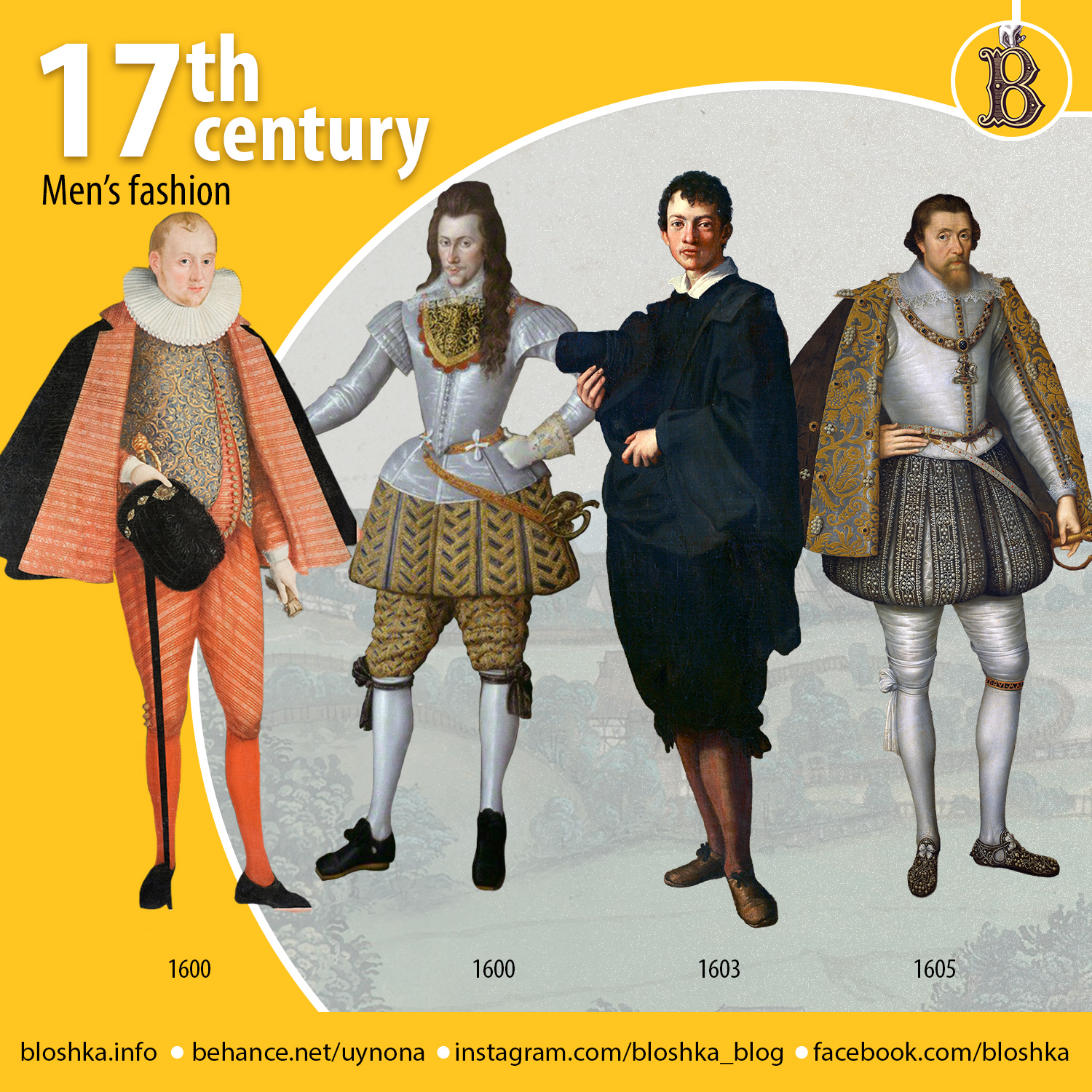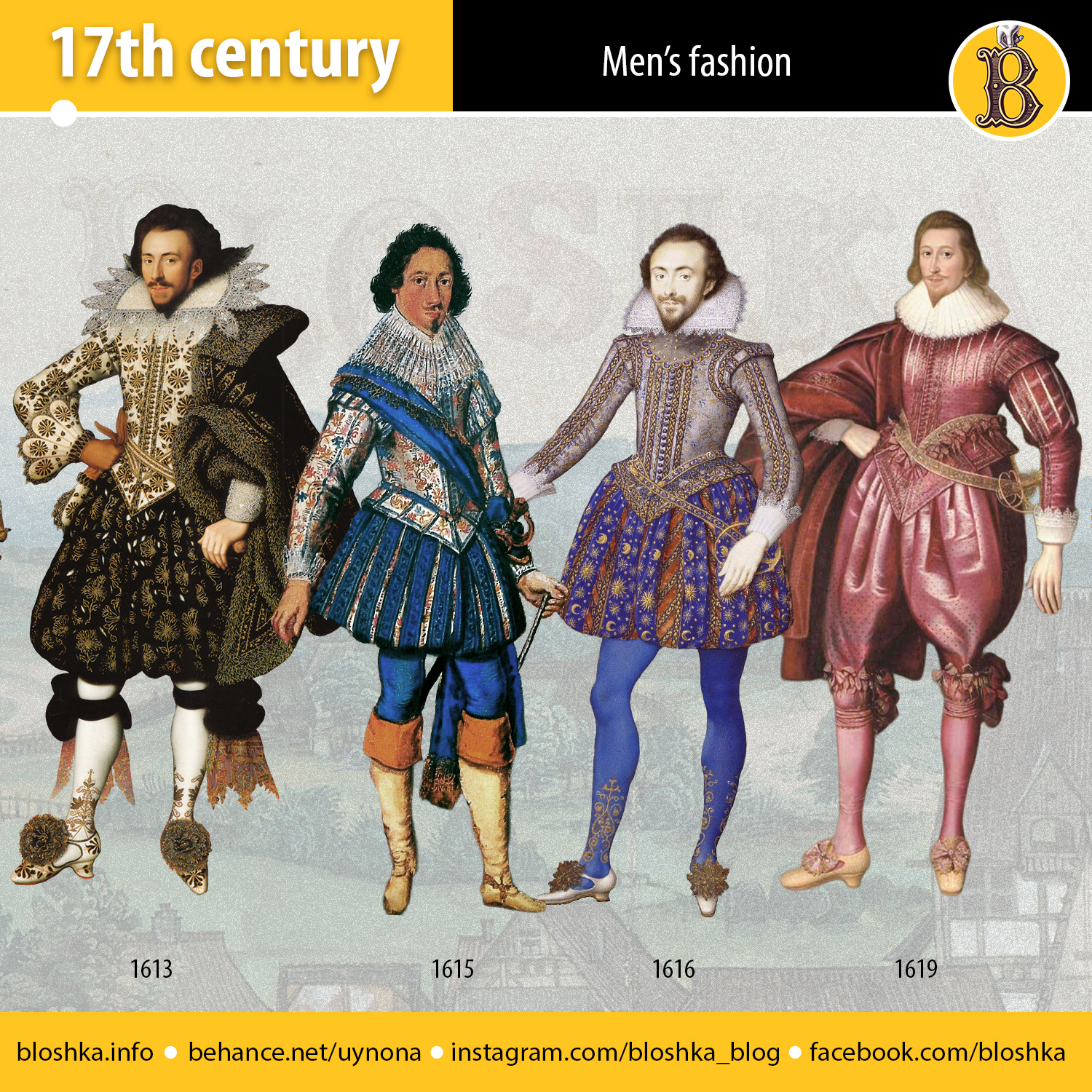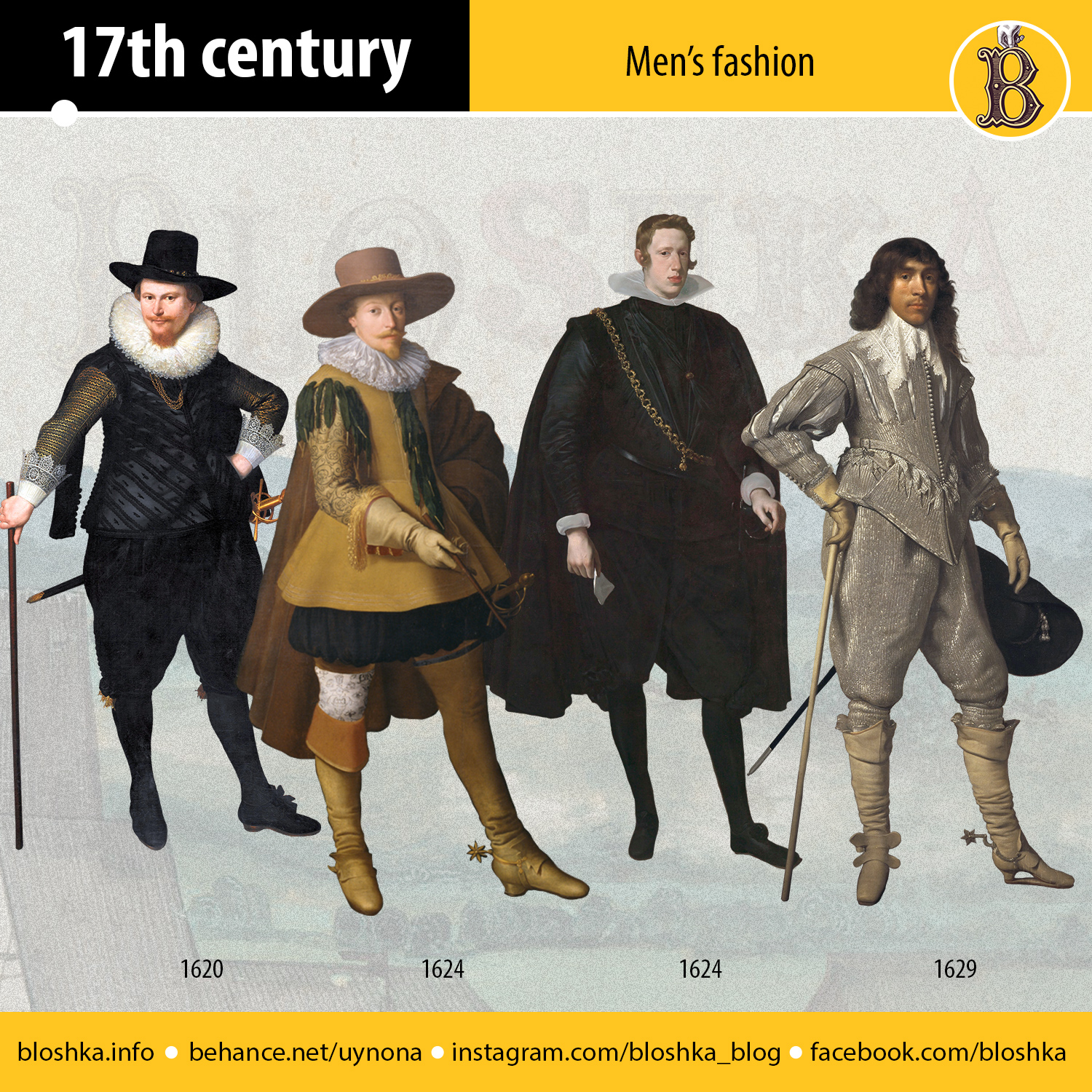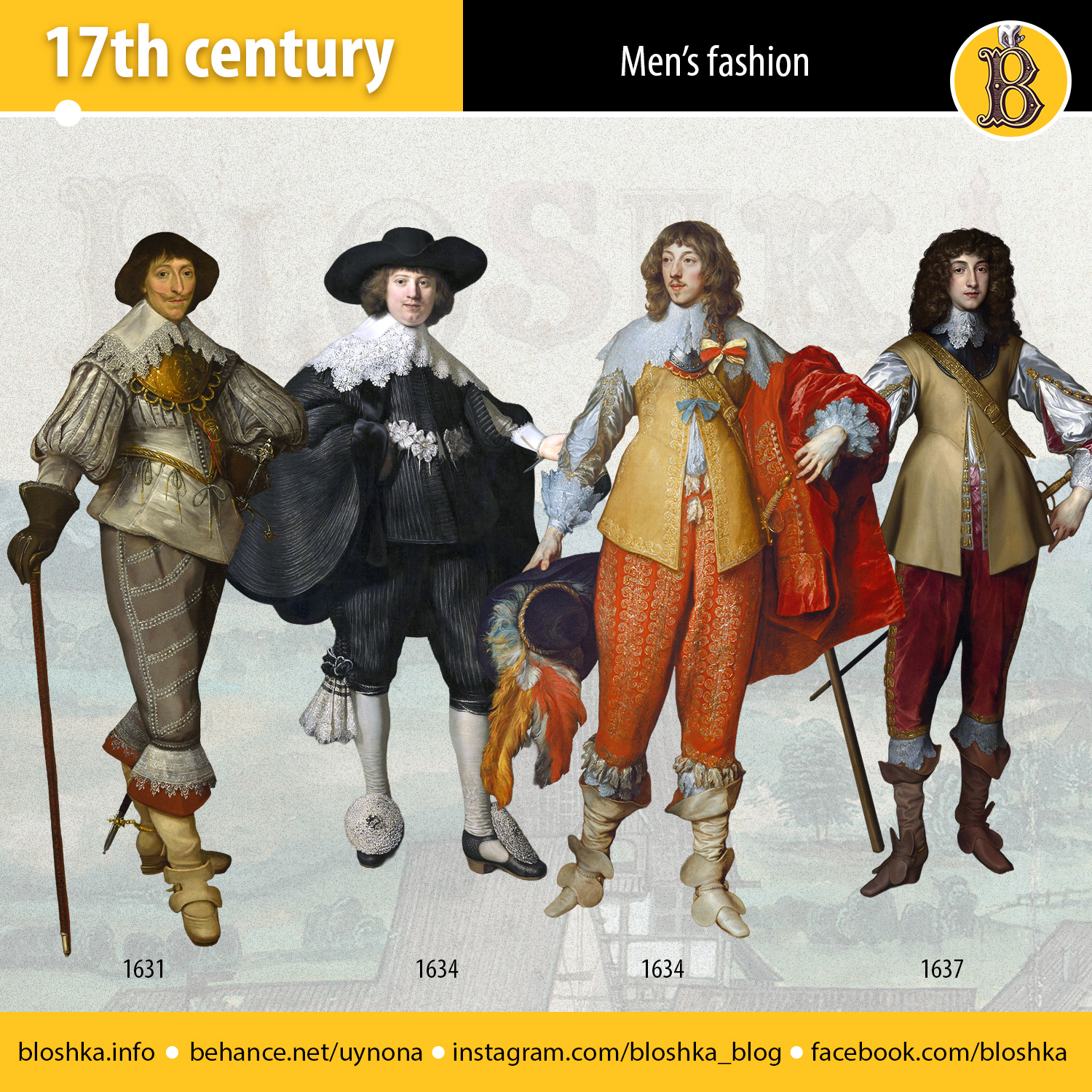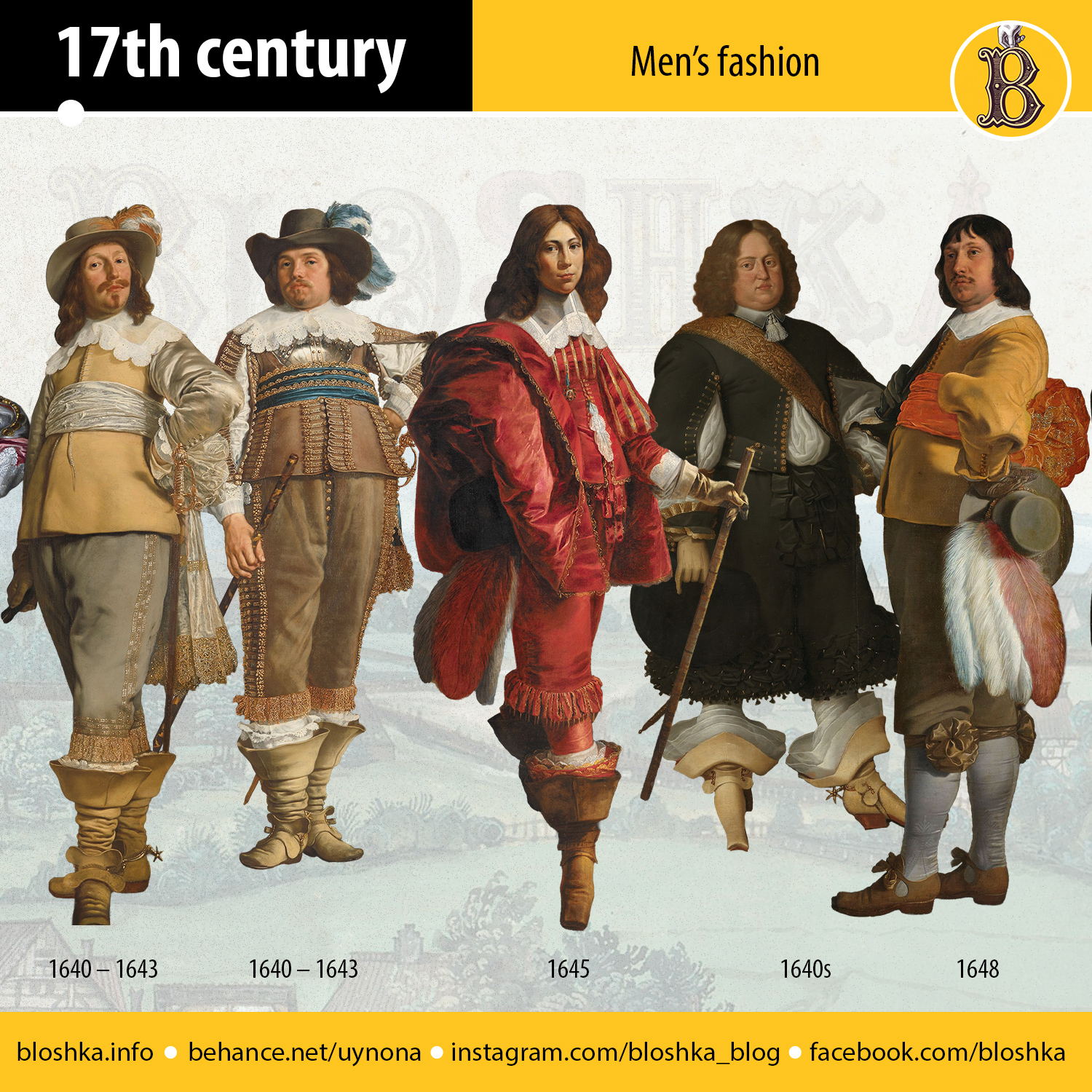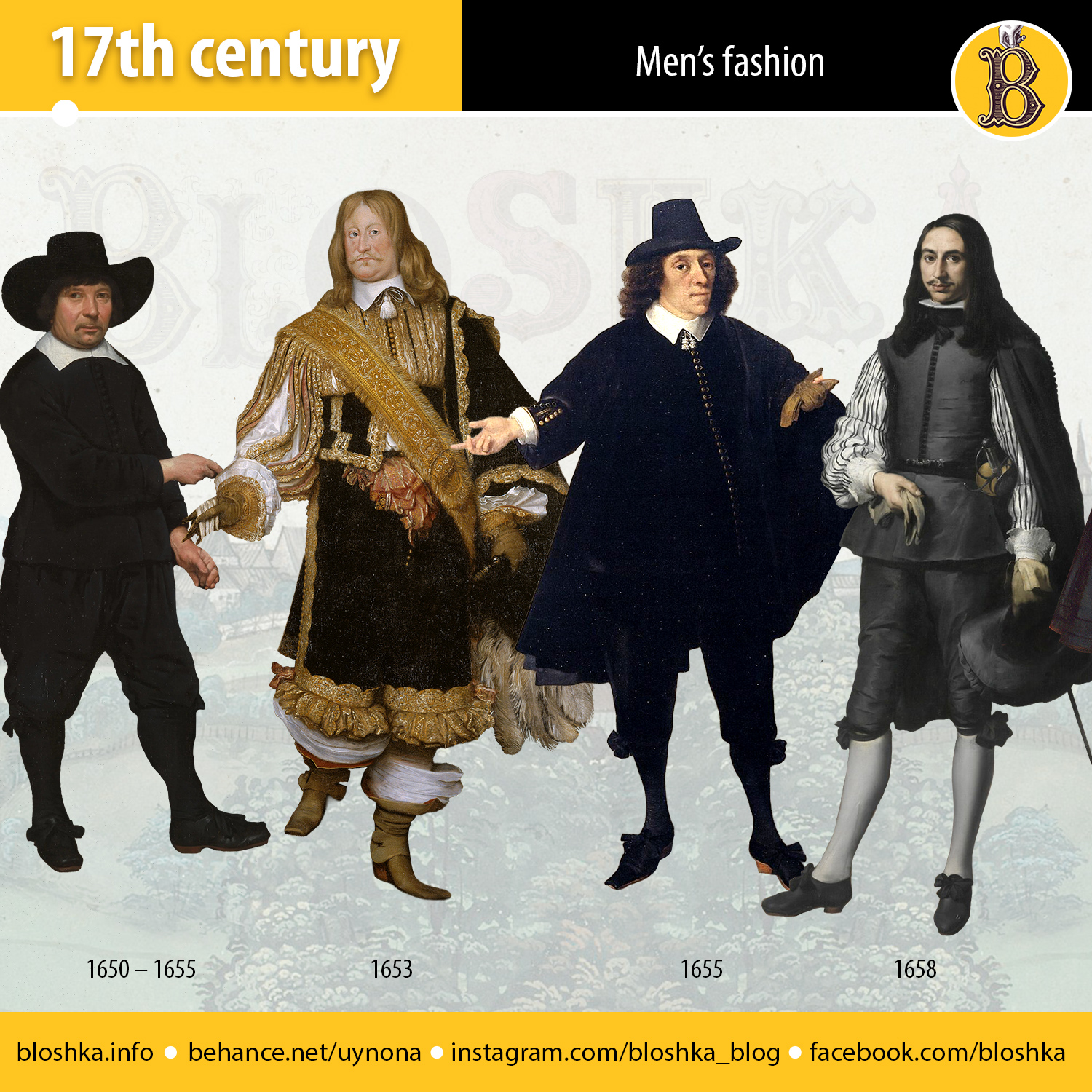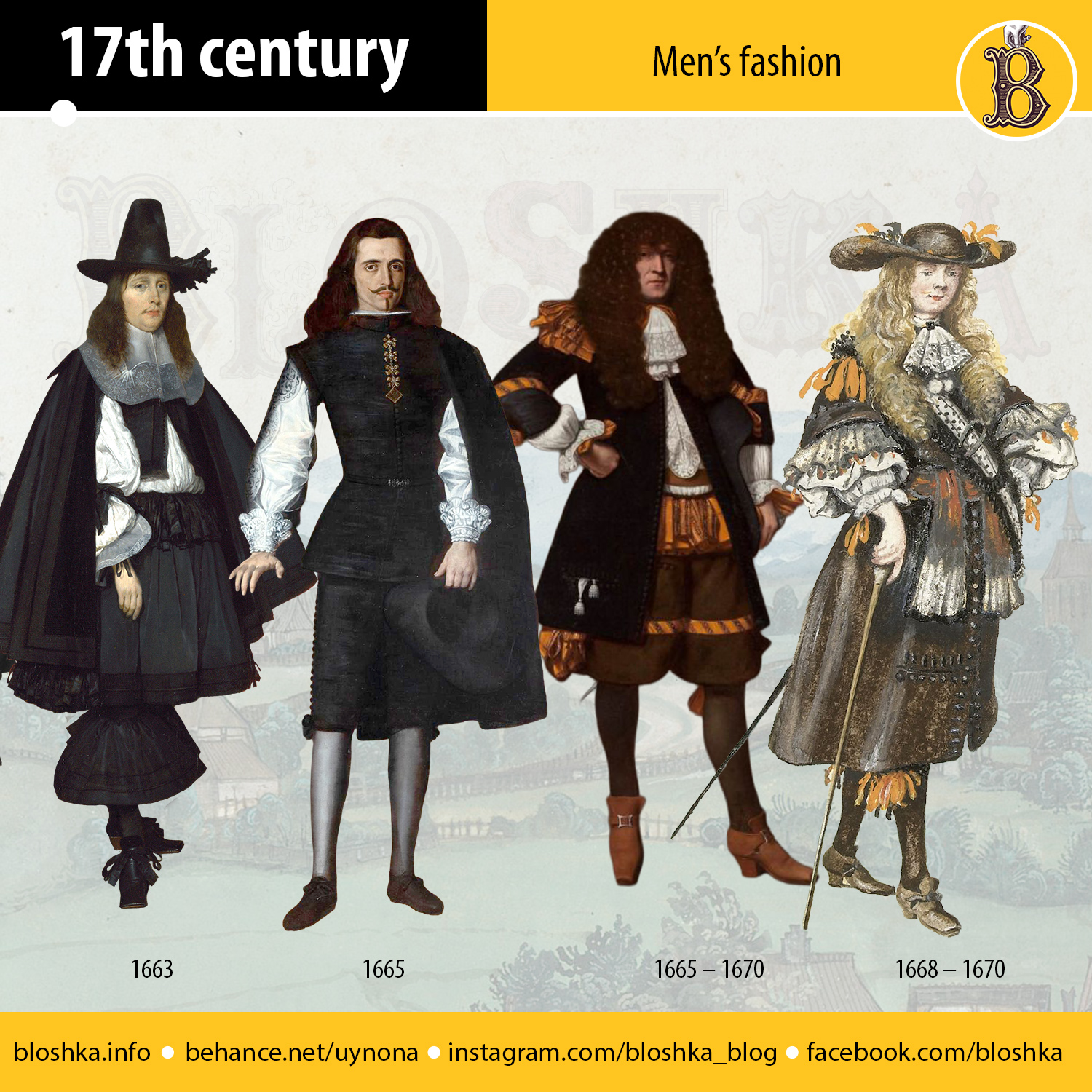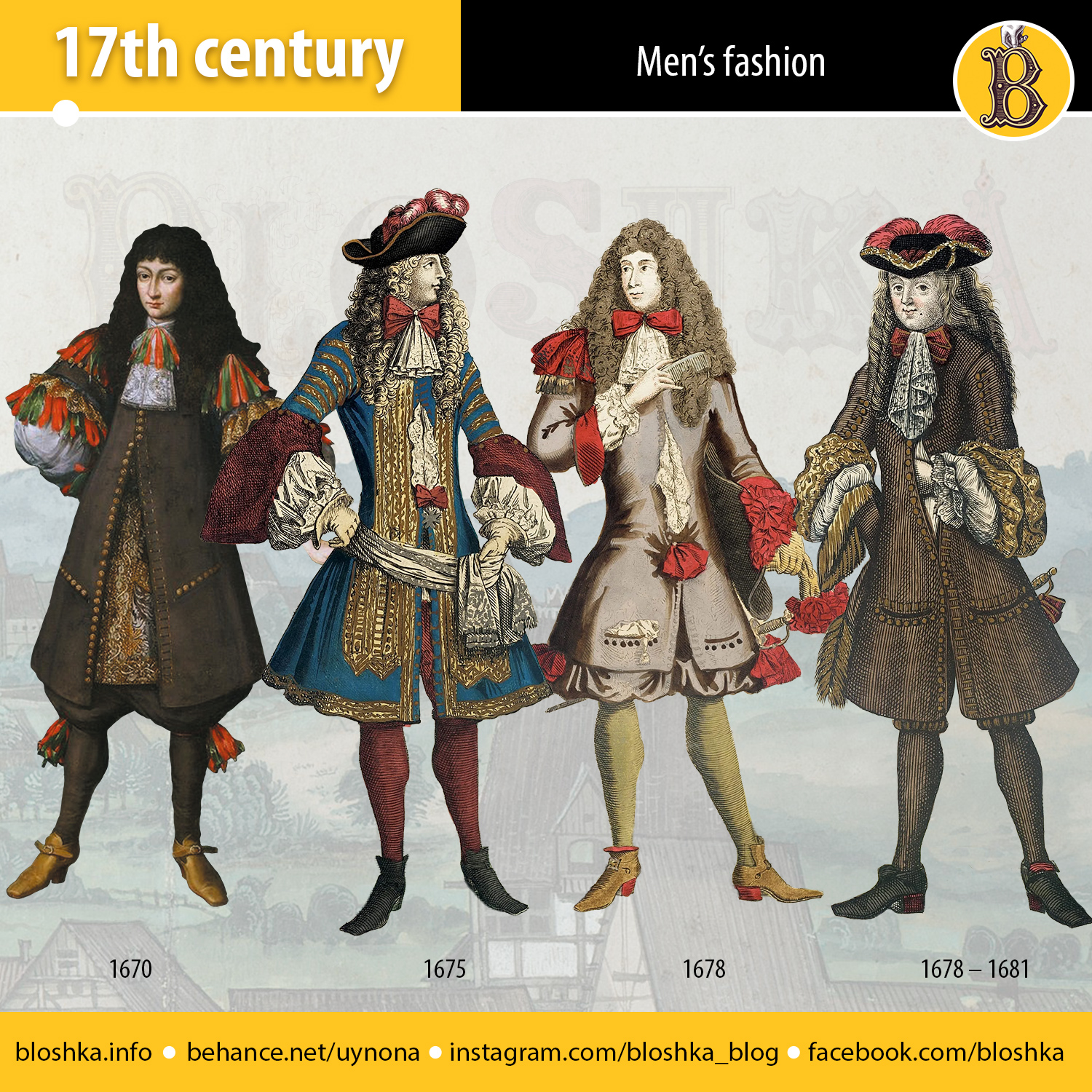

Men’s fashion 17th century
A century of dramatic changes in silhouette, proportion and decoration.
At the beginning of the 1600s, men’s dress still carried many features of the late Renaissance: fitted doublets, padded or voluminous breeches, elaborate ruffs, richly patterned fabrics and short cloaks. The silhouette was structured, decorative and often strongly geometric.
During the 1620s–1640s, clothing gradually became softer and more relaxed. Large falling collars replaced many of the stiff ruffs, breeches grew fuller, boots became an important part of fashionable dress, and longer hair helped create the unmistakable romantic silhouette we associate with the first half of the century.
By the middle of the 1600s, proportions changed again. Doublets shortened, breeches became increasingly voluminous, and ribbons, lace and other decorative details played a major role in fashionable court dress.
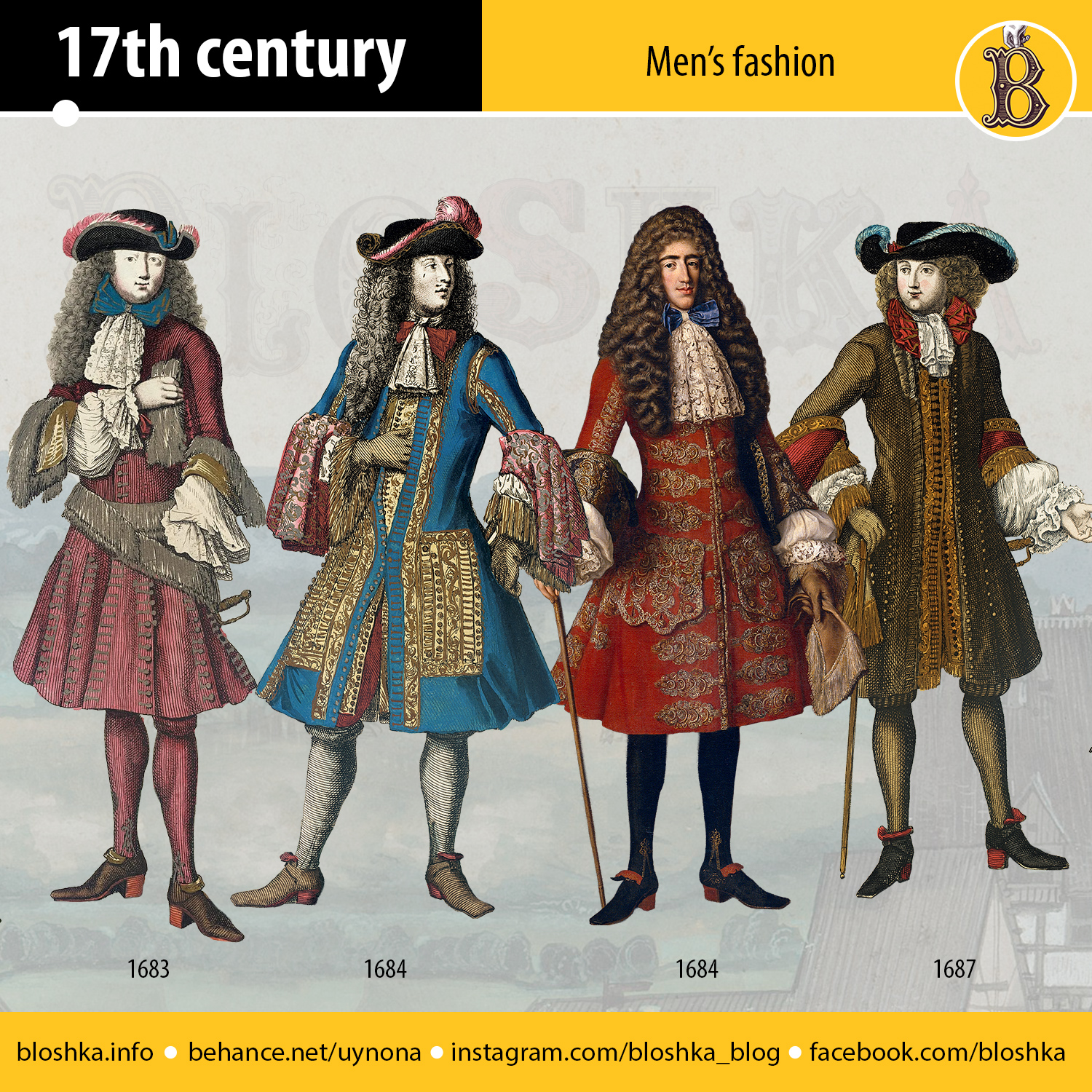
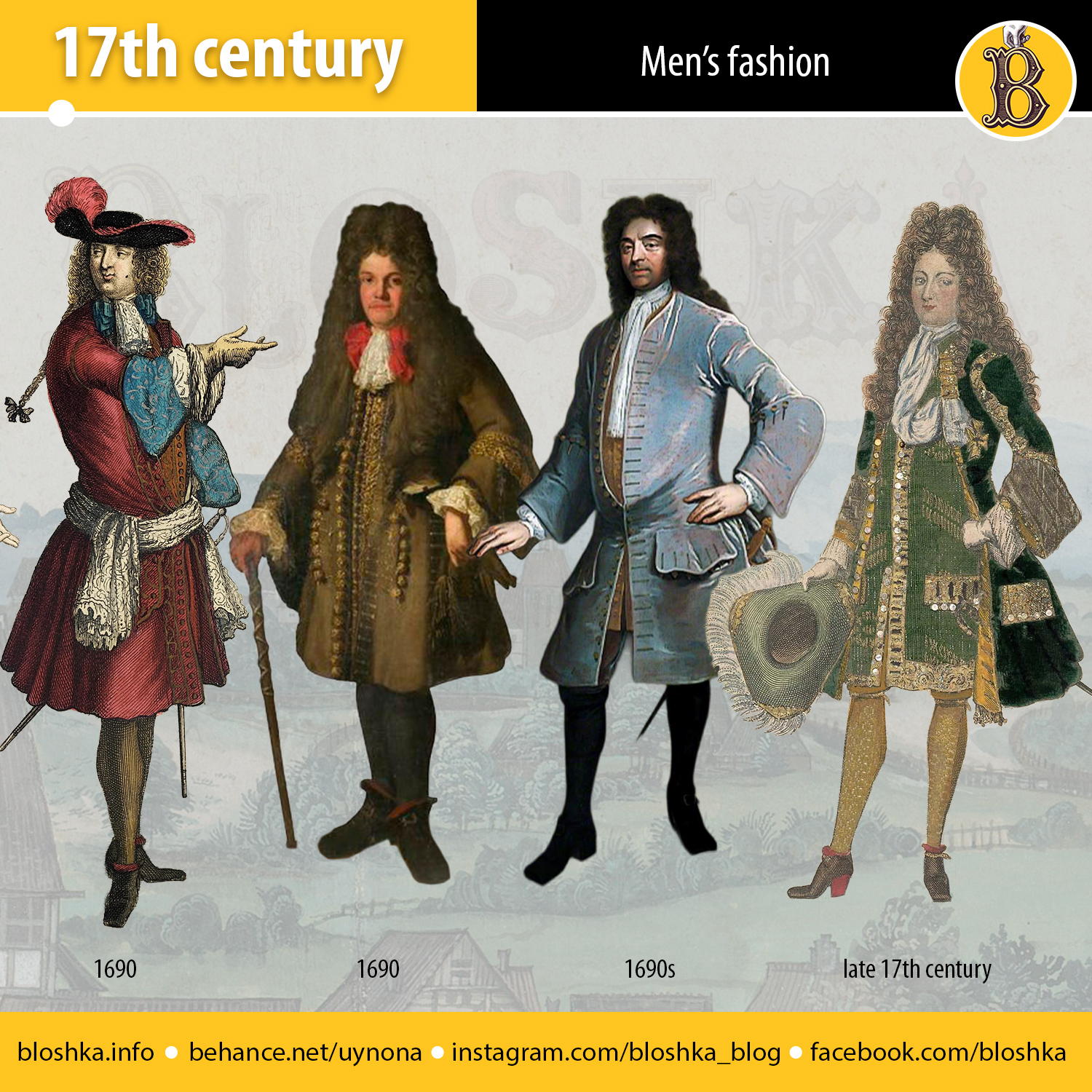
After the 1660s, men’s clothing began moving toward a completely new structure. Long coats, waistcoats and knee breeches gradually formed the basis of the male wardrobe. Cravats replaced earlier collars, while long wigs, heeled shoes and increasingly elaborate coats became characteristic of fashionable dress.
By the 1680s and 1690s, the long justaucorps, waistcoat and breeches created a silhouette that already points clearly toward the menswear of the 18th century.
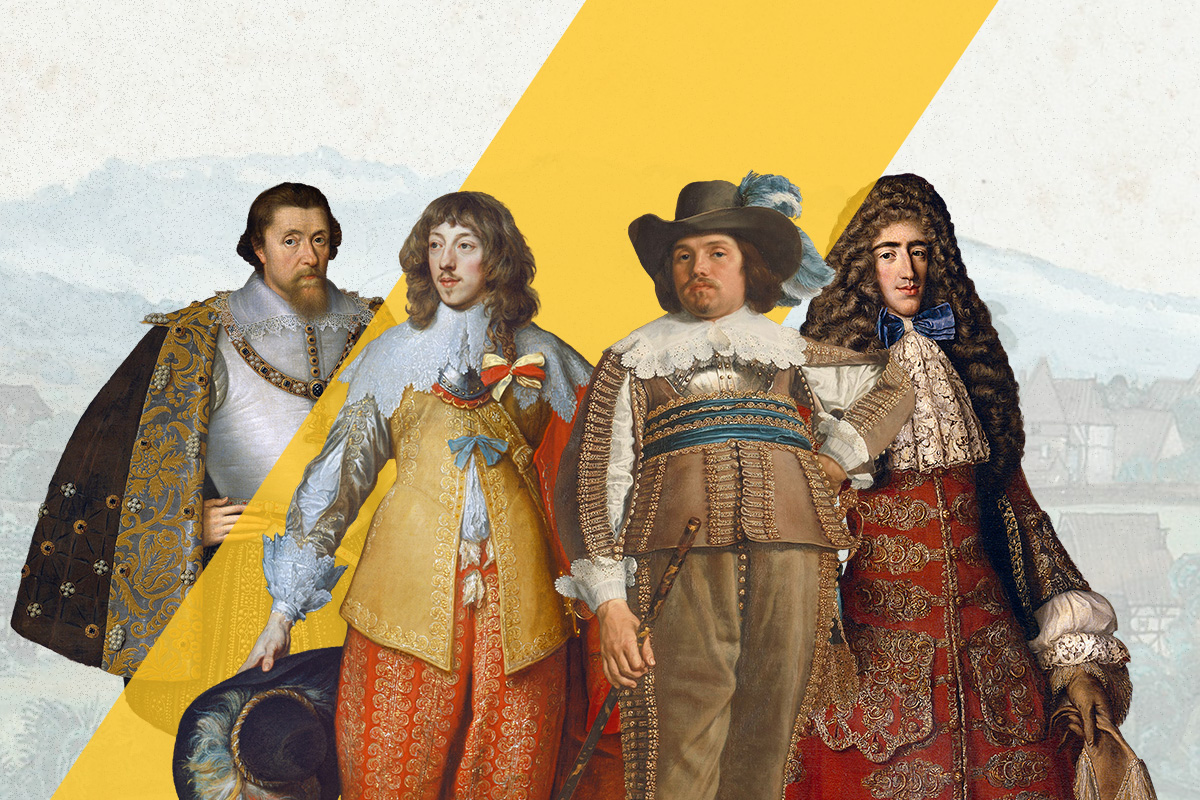
This timeline is a short visual overview of European men’s fashion, showing some of the major changes in fashionable silhouettes throughout the 17th century. Styles varied considerably by country, court, social position and occasion, and the surviving portraits naturally represent fashionable and elite dress particularly well.