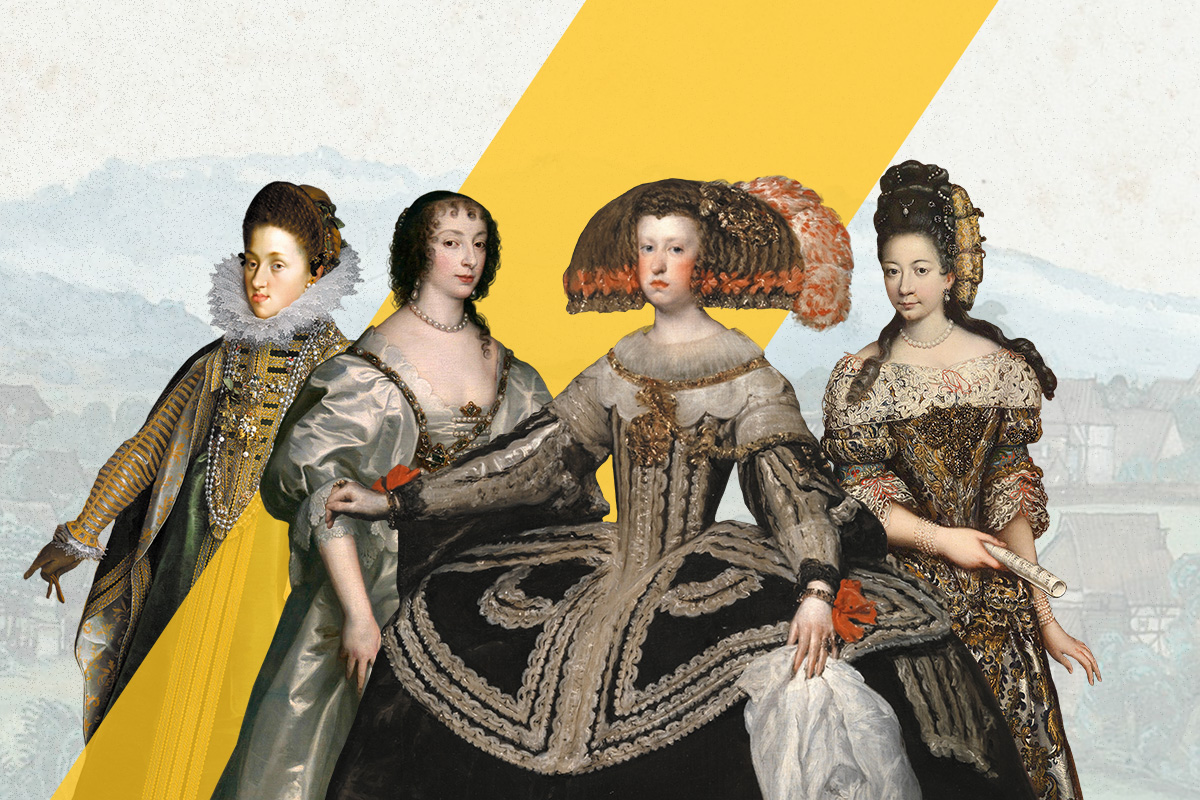
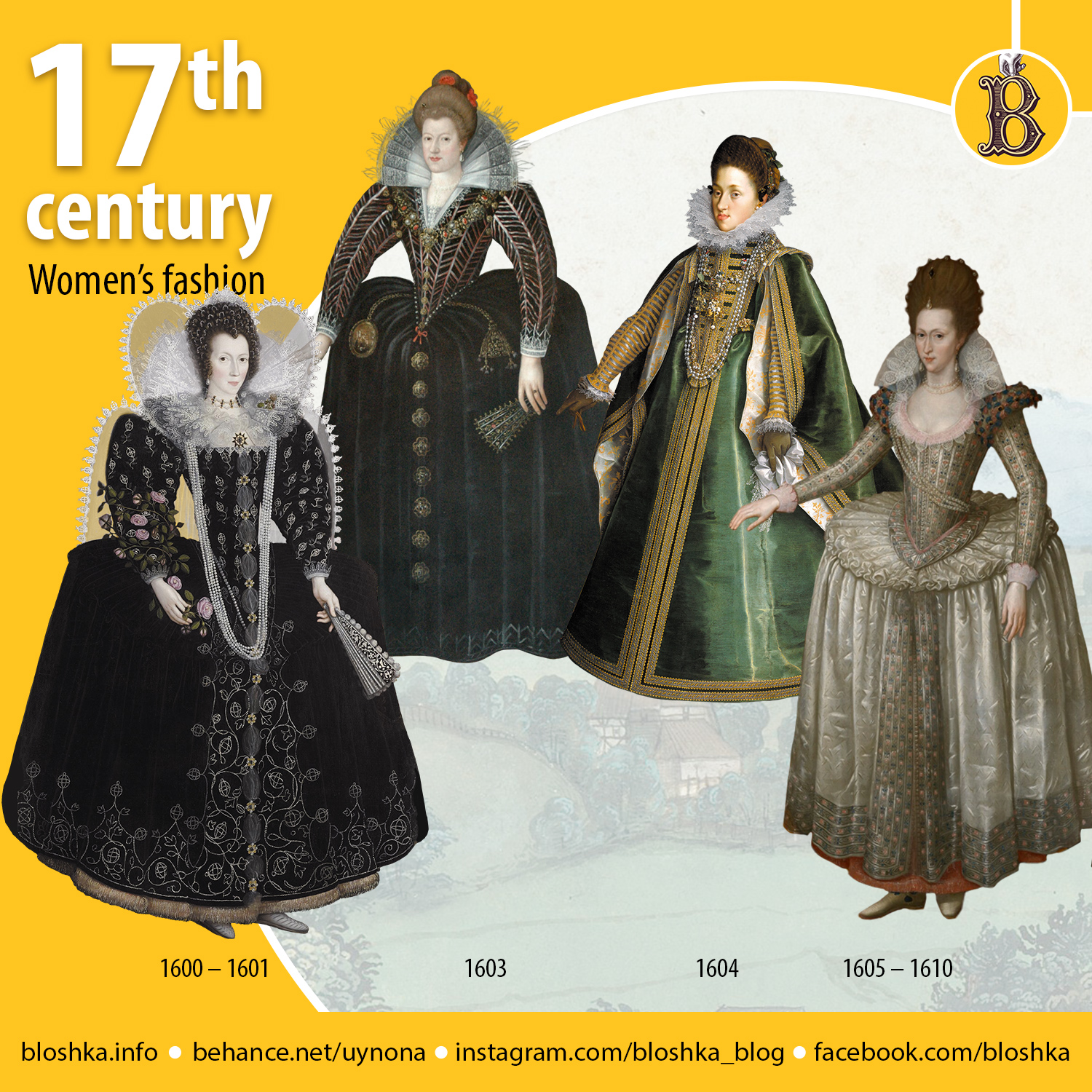
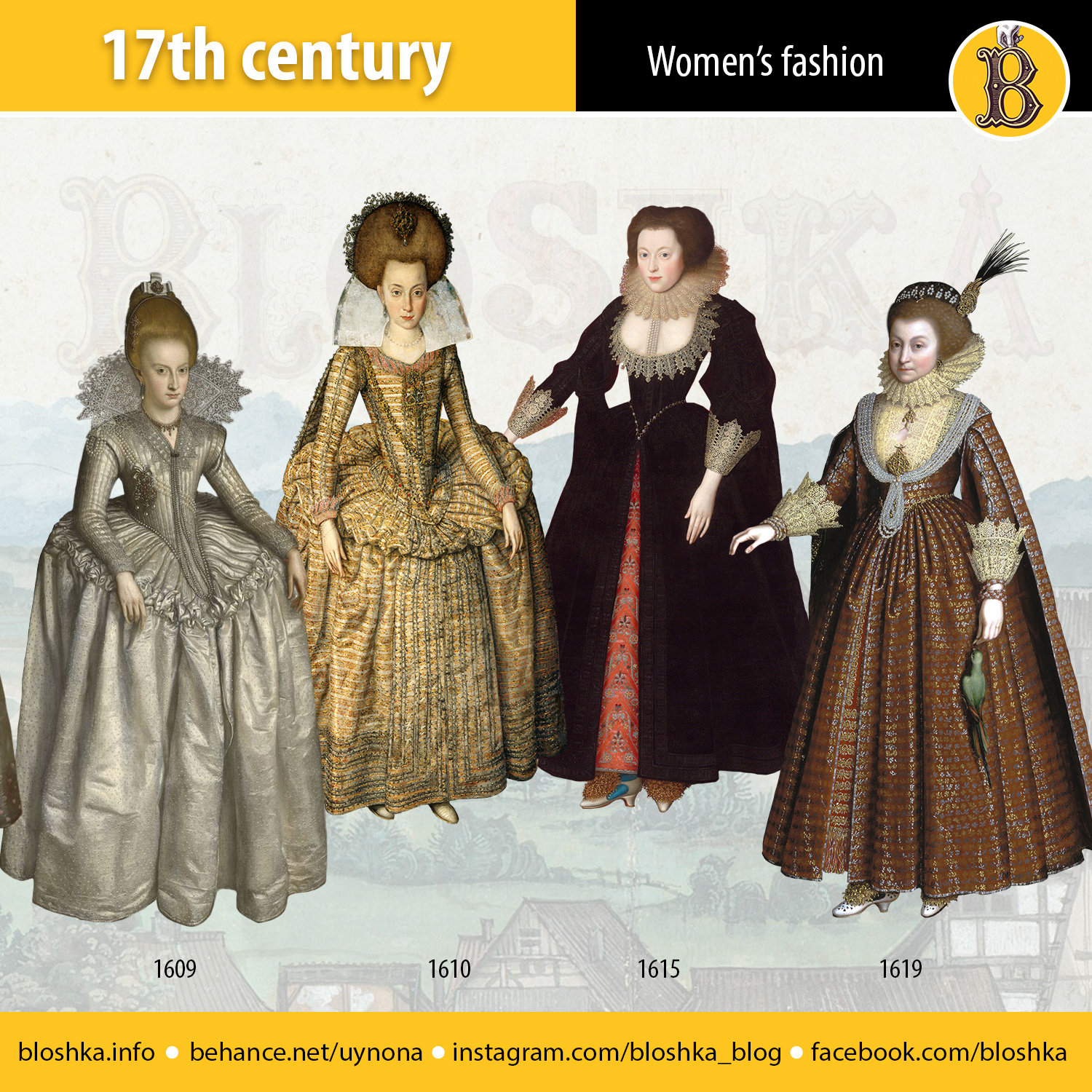
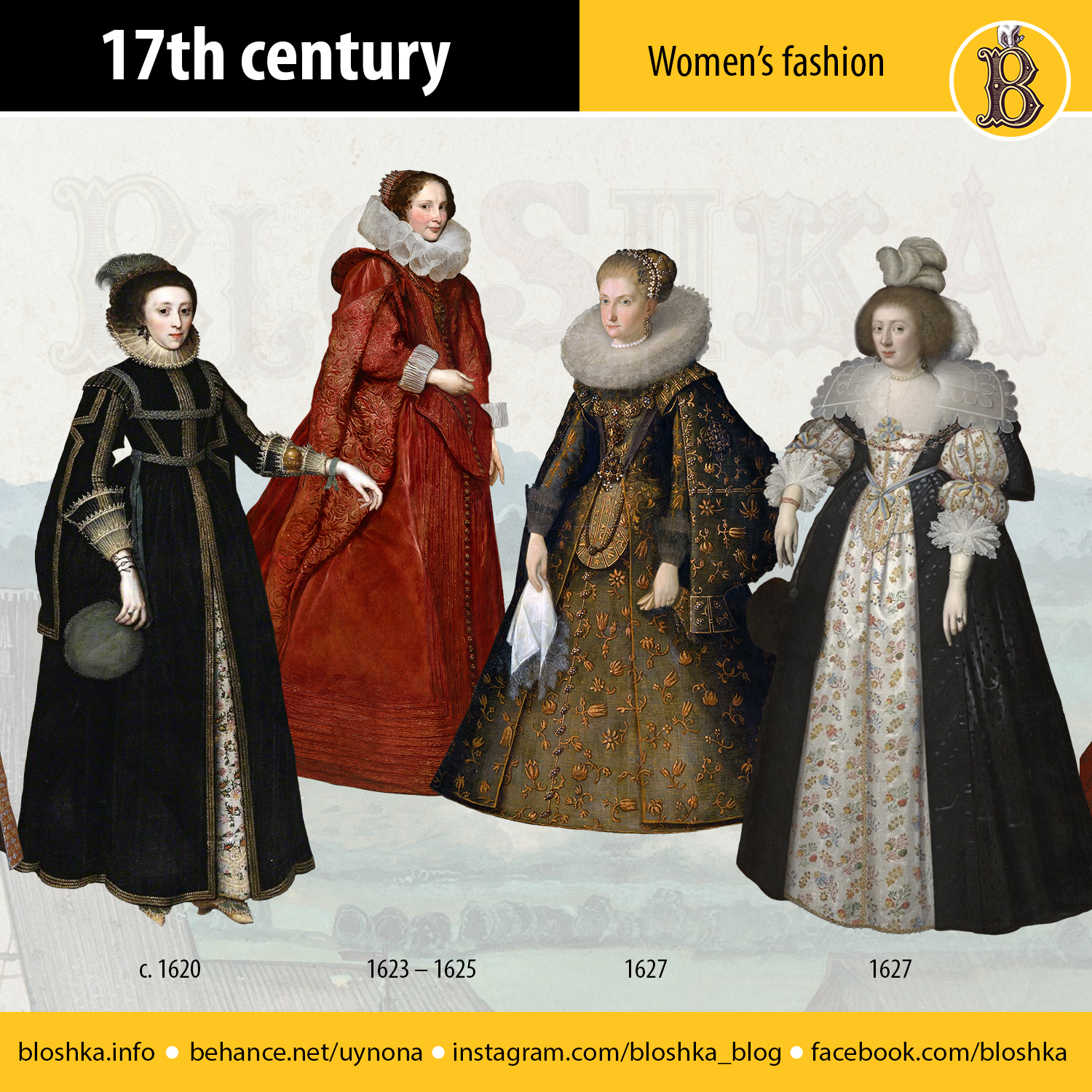
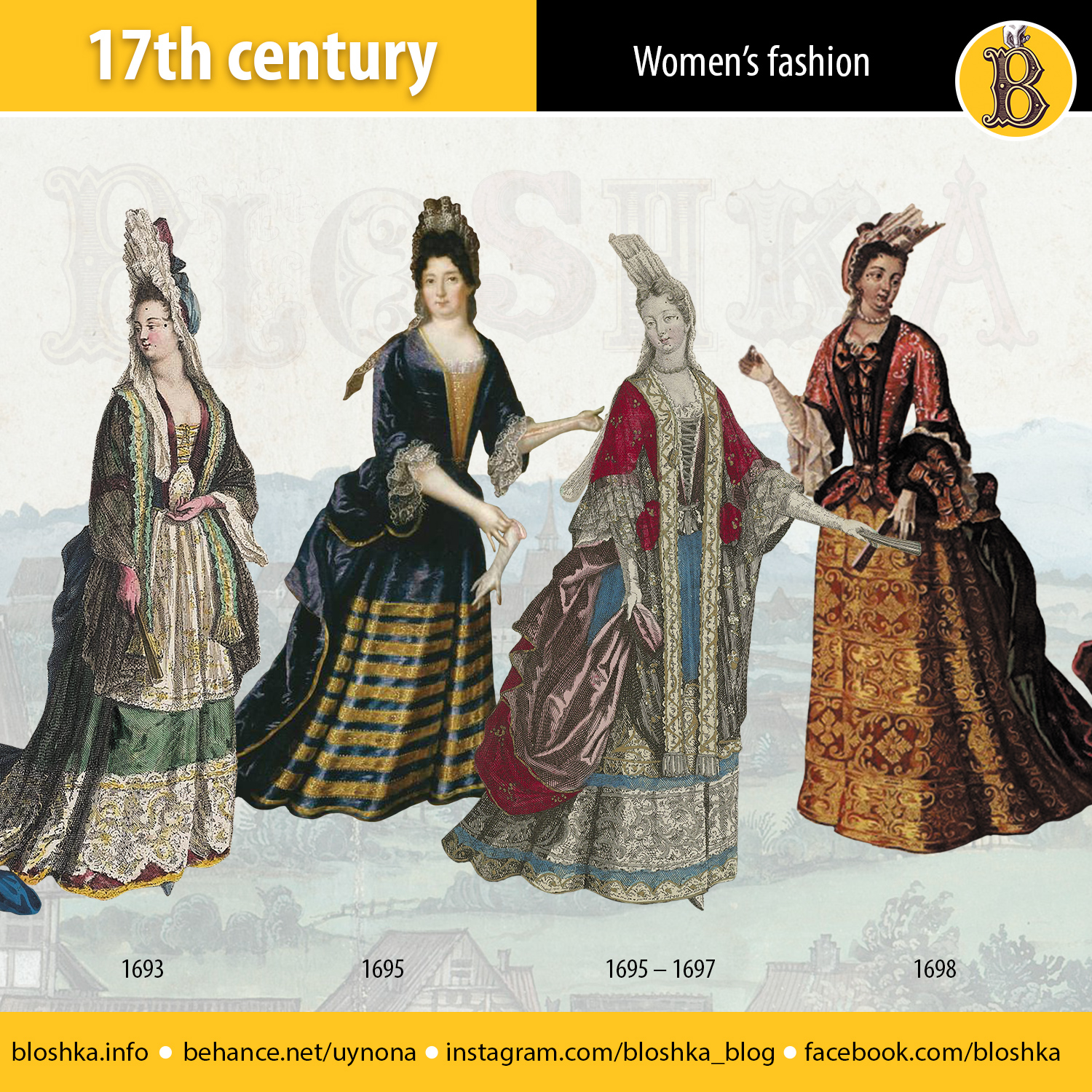
Women’s fashion through the 17th century
The 17th century brought major changes to women’s dress, from the rigid and highly structured silhouettes of the late Renaissance to the softer, more fluid fashions of the mid-century, and finally to the elaborate court styles of the late 1600s.
At the beginning of the century, fashionable dress still relied on stiff bodices, wide skirts, rich textiles and elaborate ruffs. Sleeves were often heavily decorated, while jewellery, embroidery and lace emphasized status and formality.
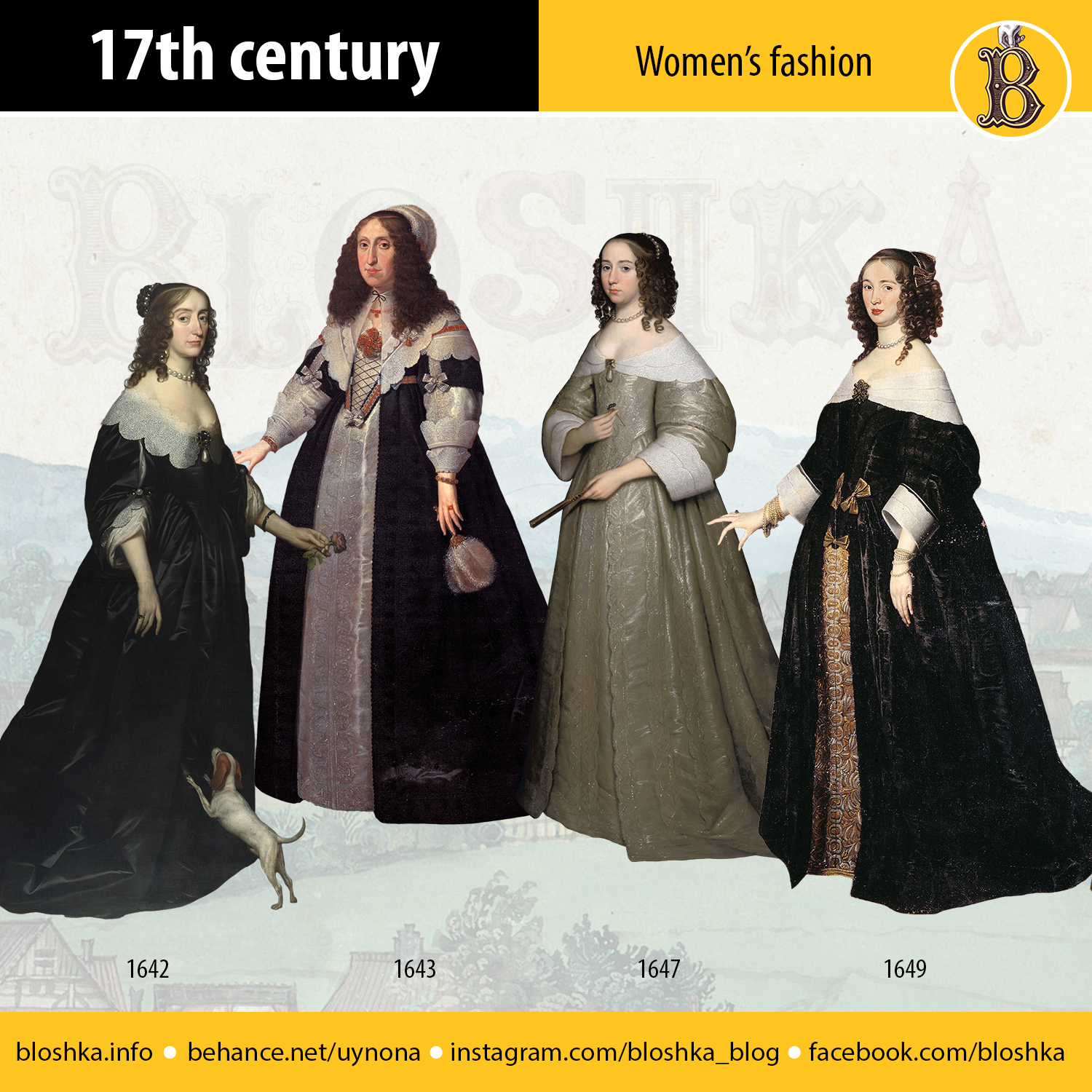
During the 1620s and 1630s, silhouettes gradually softened. Necklines became wider, collars changed shape, sleeves gained more volume, and hairstyles became less rigid. In many portraits of the 1630s and 1640s, women appear in lighter, more flowing fabrics, with broad lace collars and a noticeably more relaxed line through the bodice and skirt.
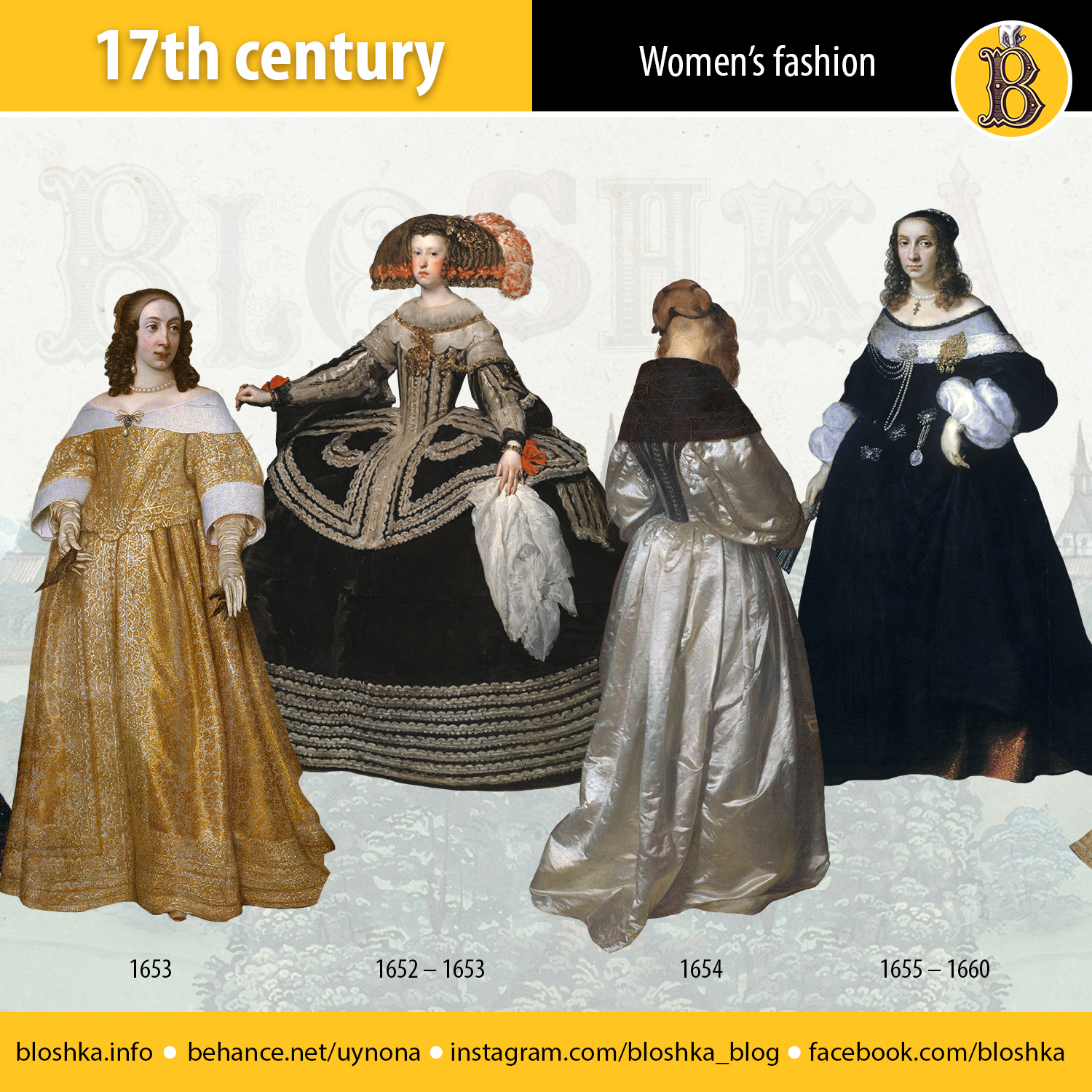
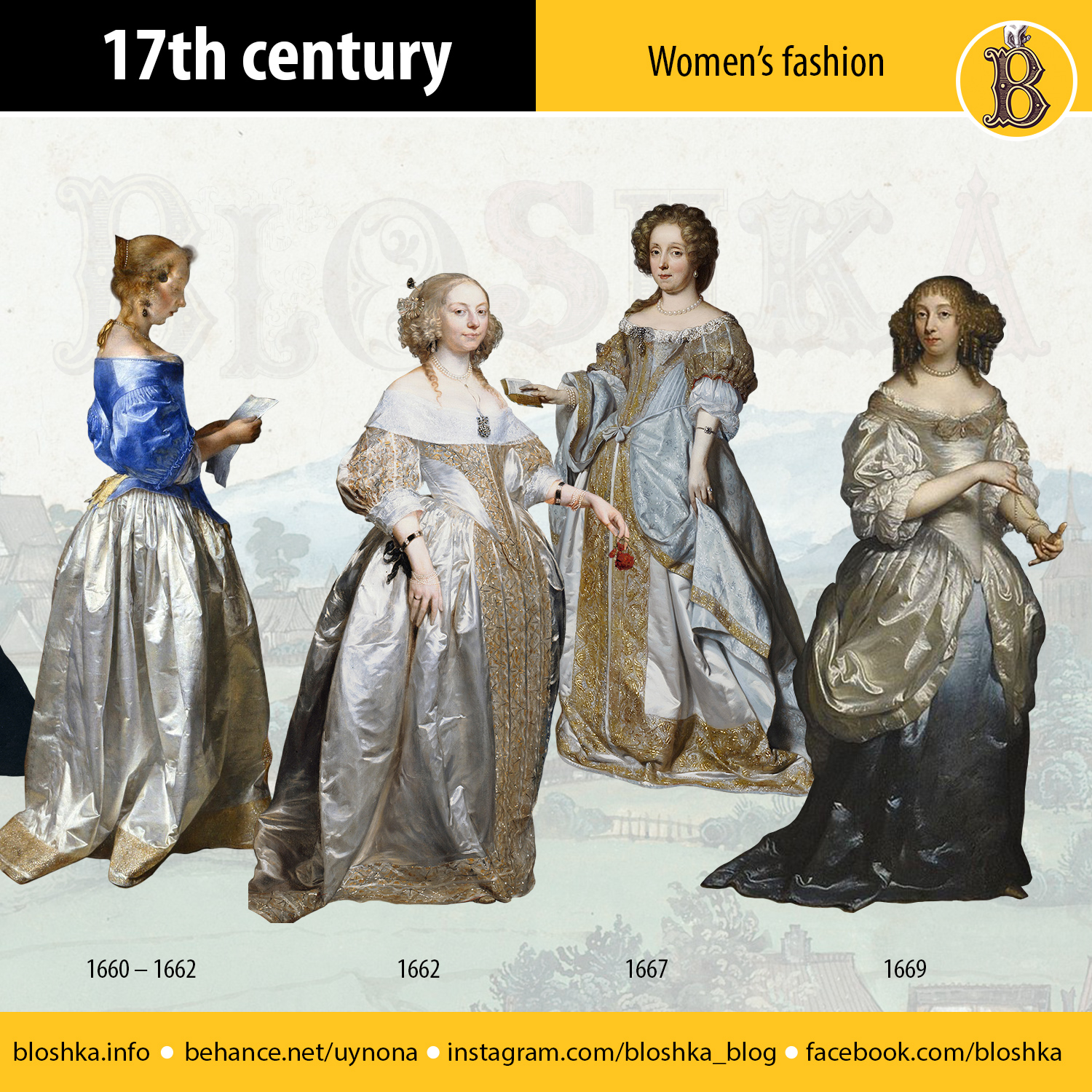
By the middle of the century, low necklines, rounded sleeves and softer drapery became increasingly fashionable. Satin and silk gowns created a fluid surface, while pearls, ribbons and lace remained important decorative elements. At the same time, regional differences became especially visible, with Dutch, English, French, Spanish and Central European dress often following distinct traditions.
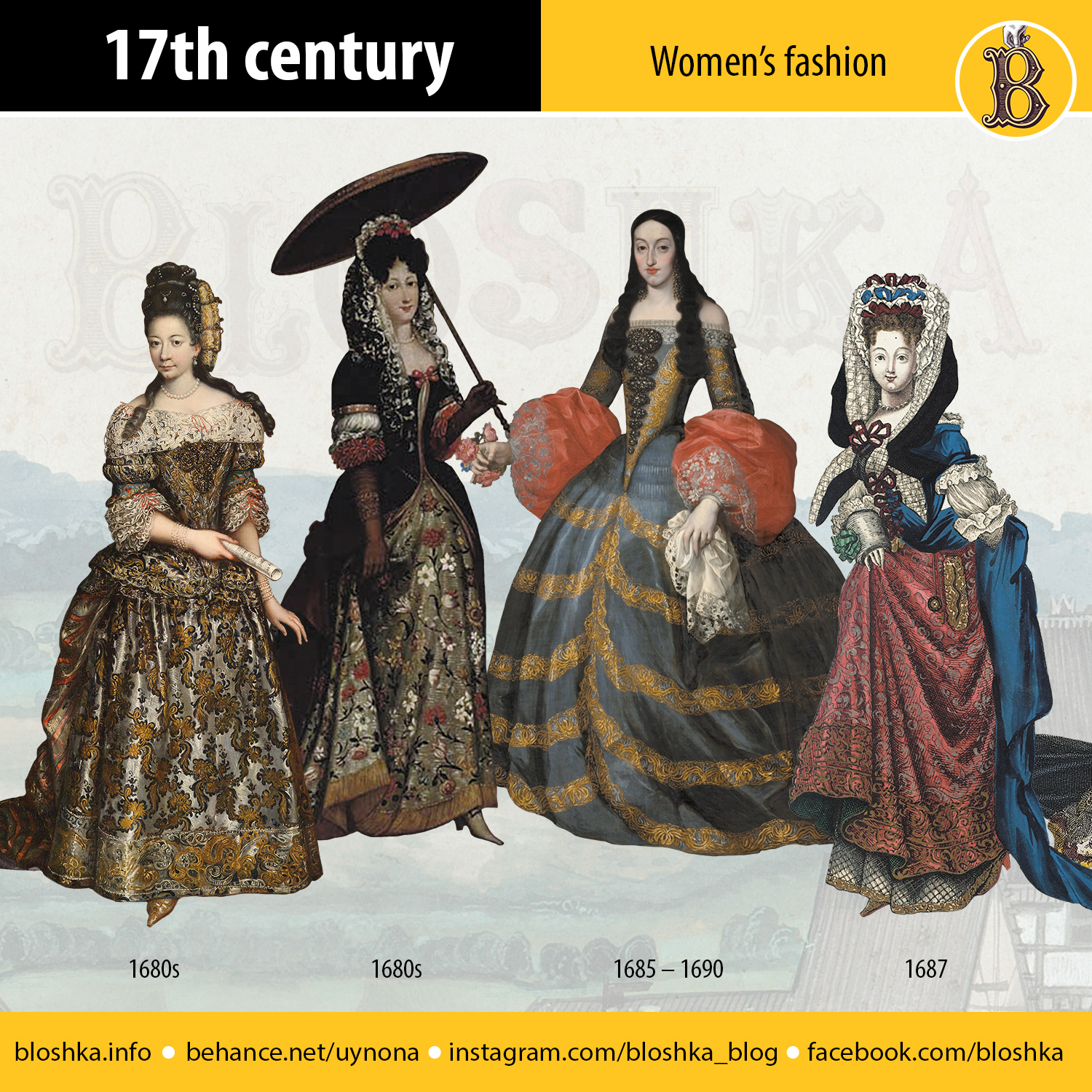
From the 1670s onward, the silhouette began to change again. Bodices became more structured, skirts were increasingly arranged in layers and drapery, and fashionable court dress grew more elaborate. Hairstyles rose higher, sleeves shortened, and decorative trims became more prominent.
By the 1690s, women’s fashion was moving clearly toward the styles associated with the early 18th century: tall headdresses, more formal bodices, layered skirts and increasingly complex arrangements of fabric and decoration.
This timeline is a short visual overview of European women’s fashion, created to show some of the major changes in silhouette and proportion throughout the 17th century. Fashion varied considerably by country, court, social status and occasion, so these images represent only part of a much broader and more diverse picture.