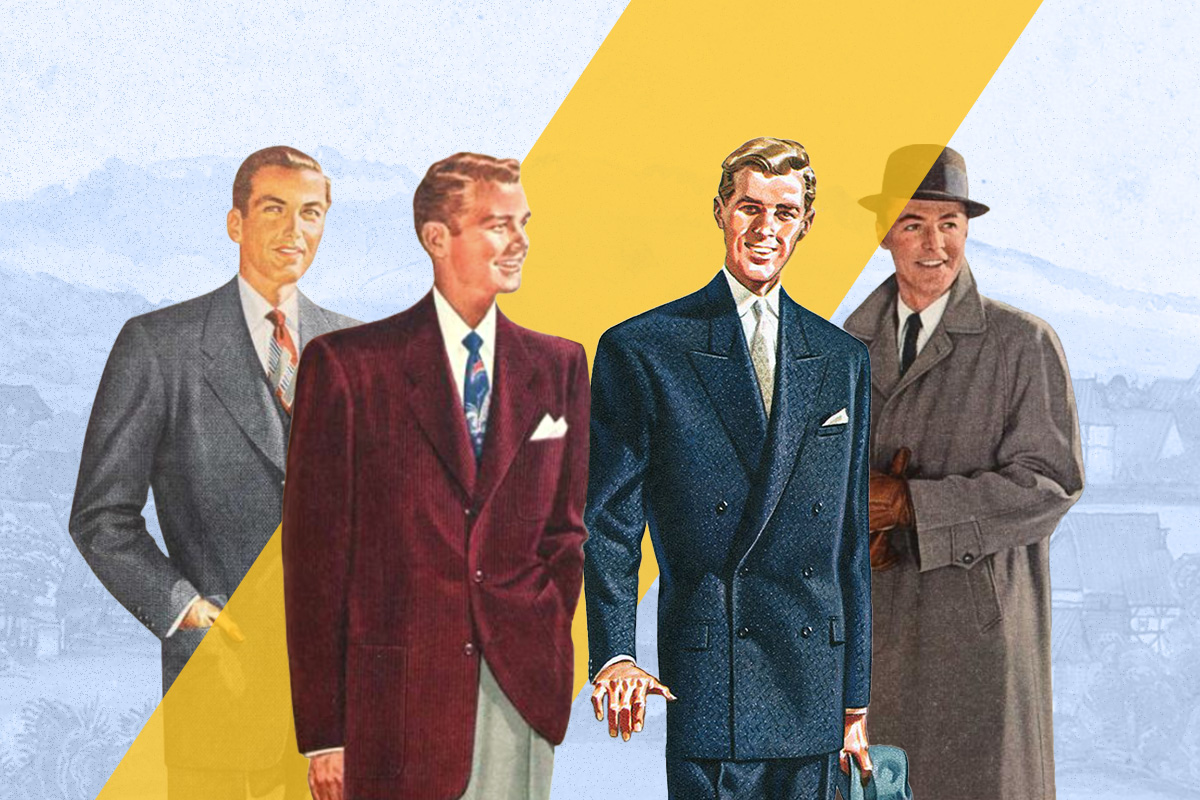
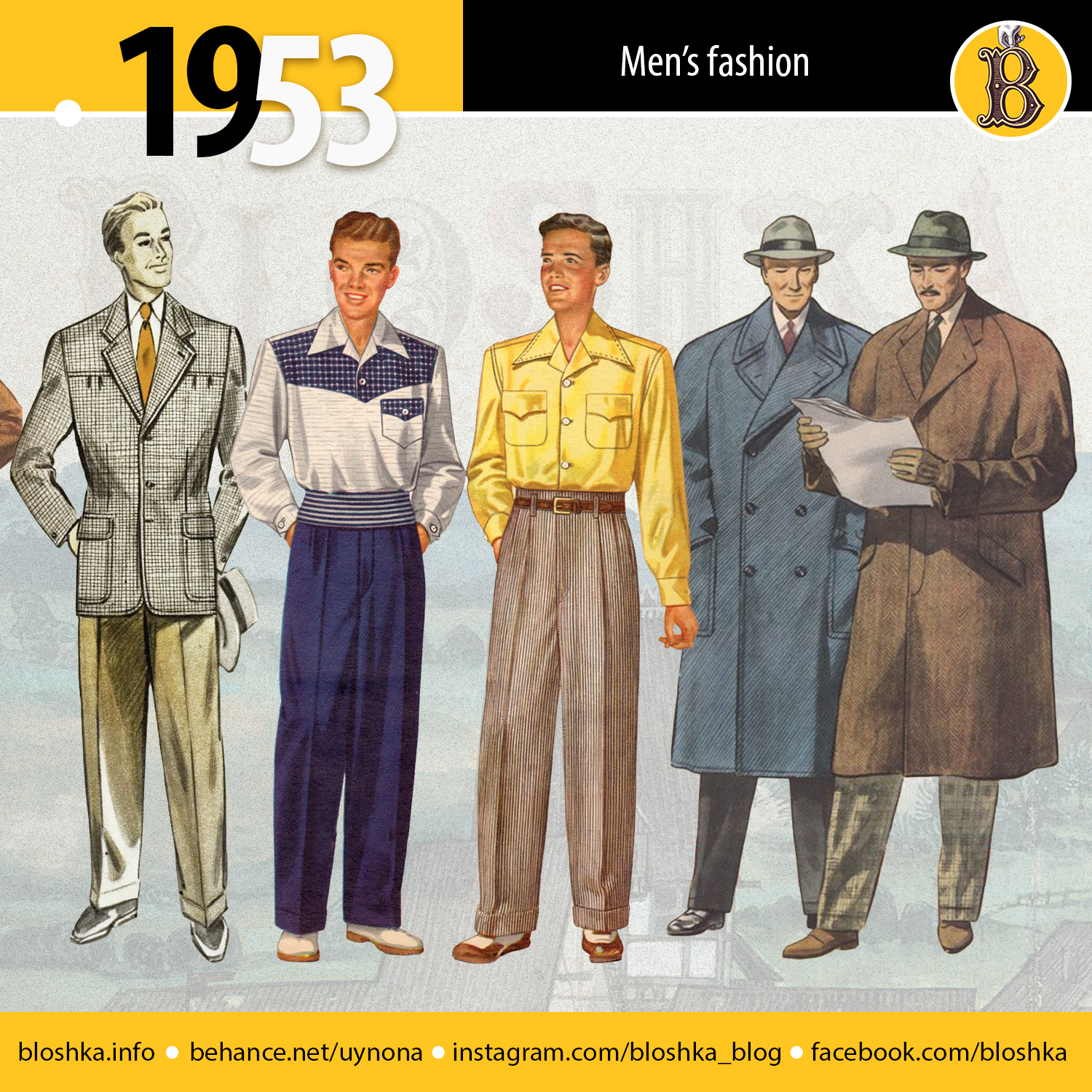
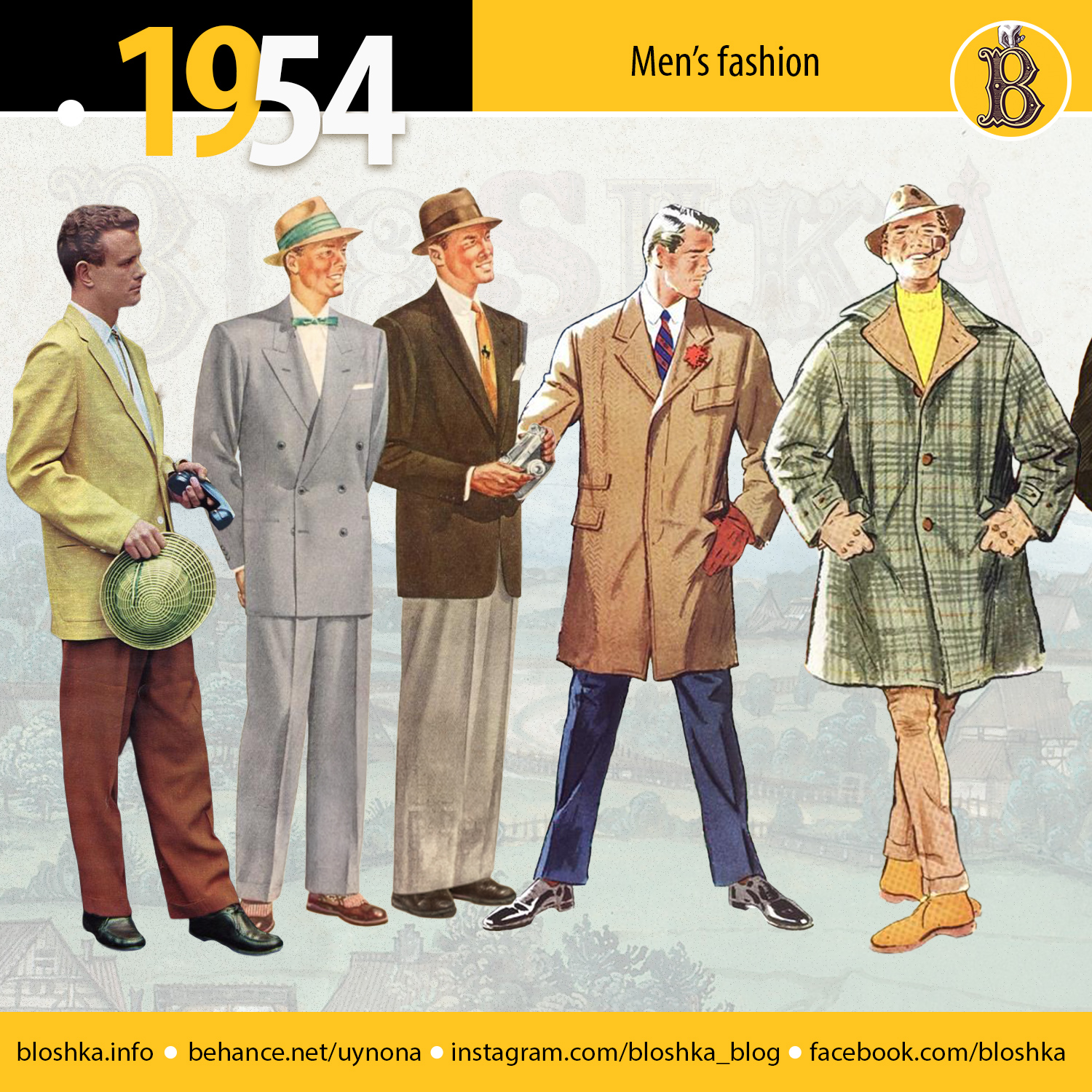
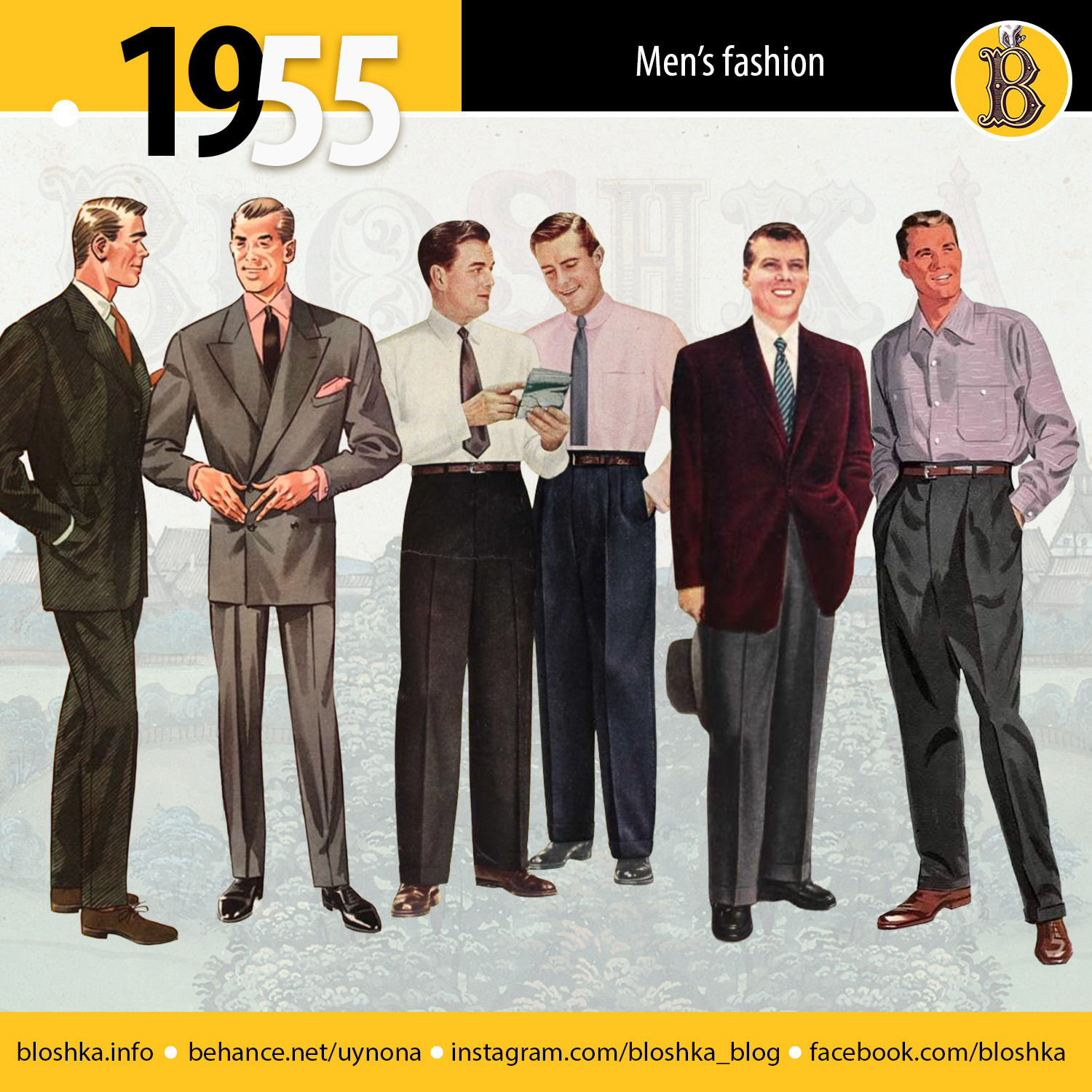
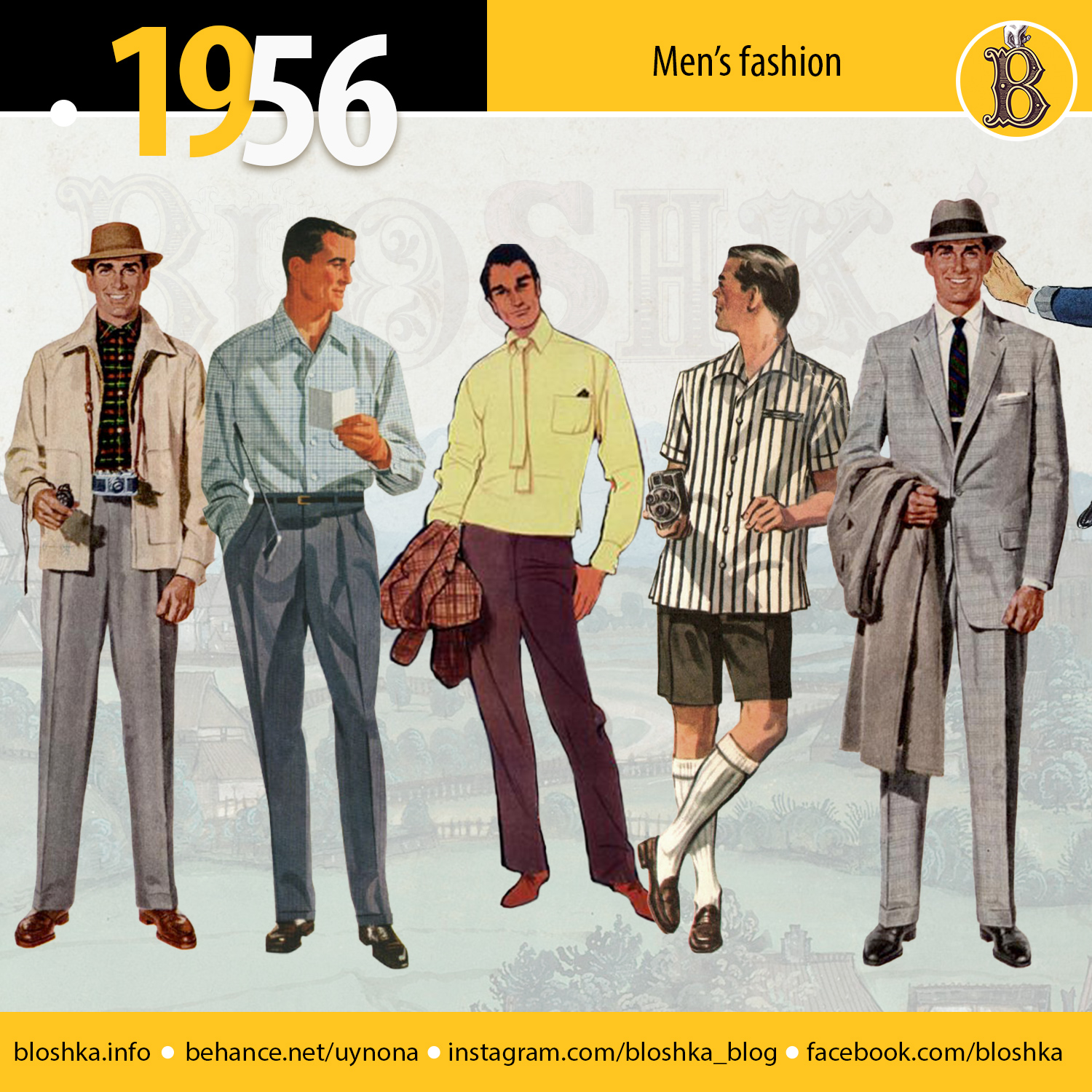
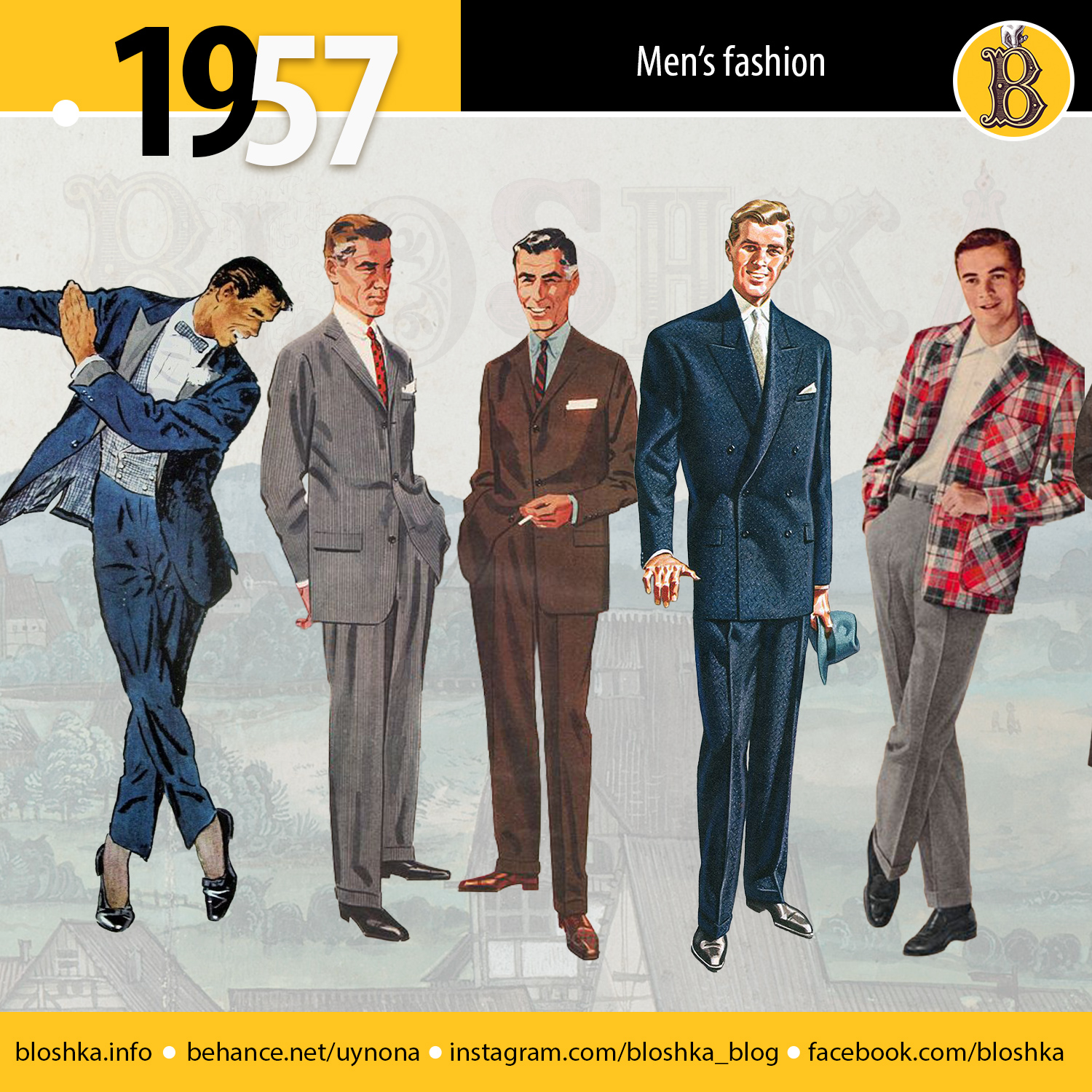
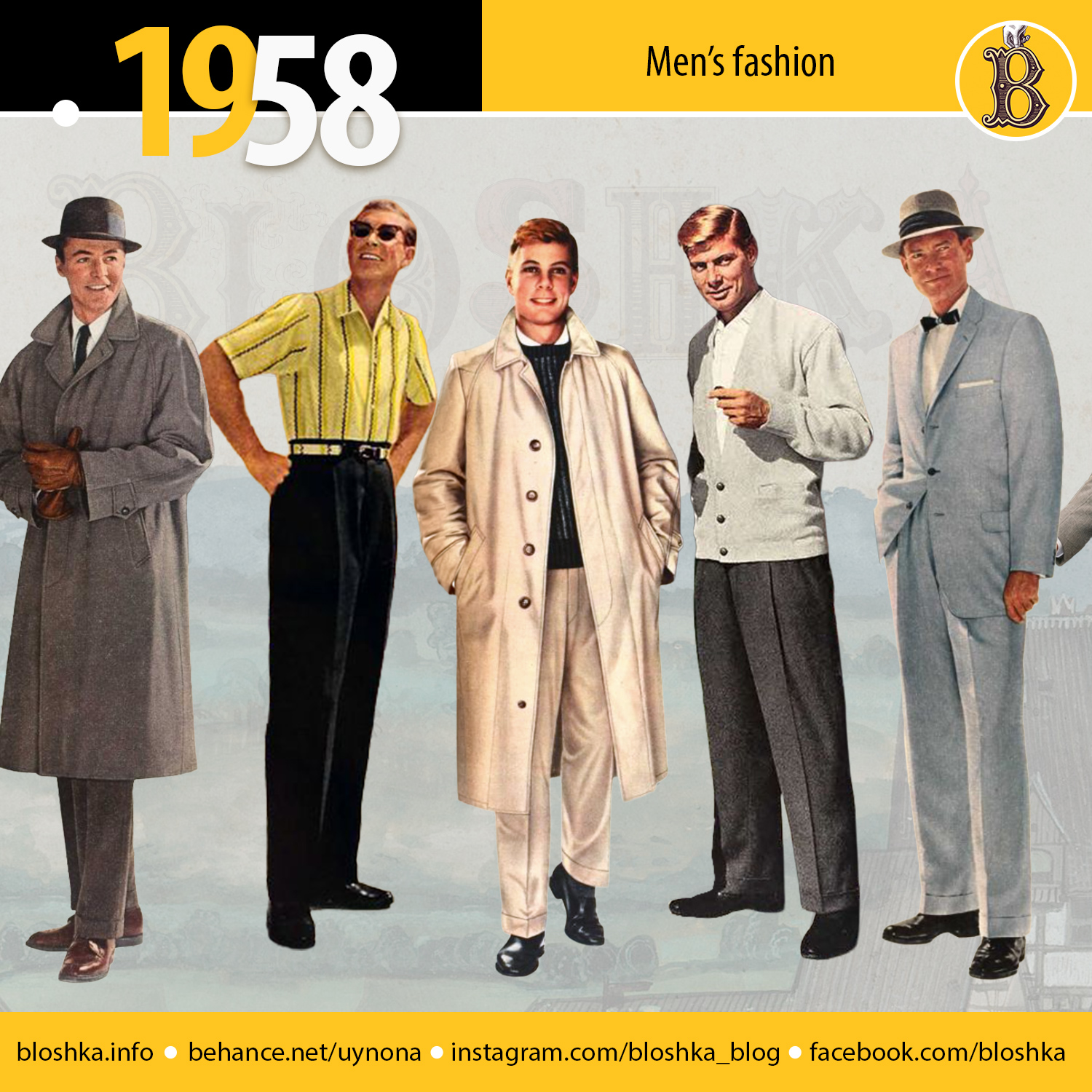
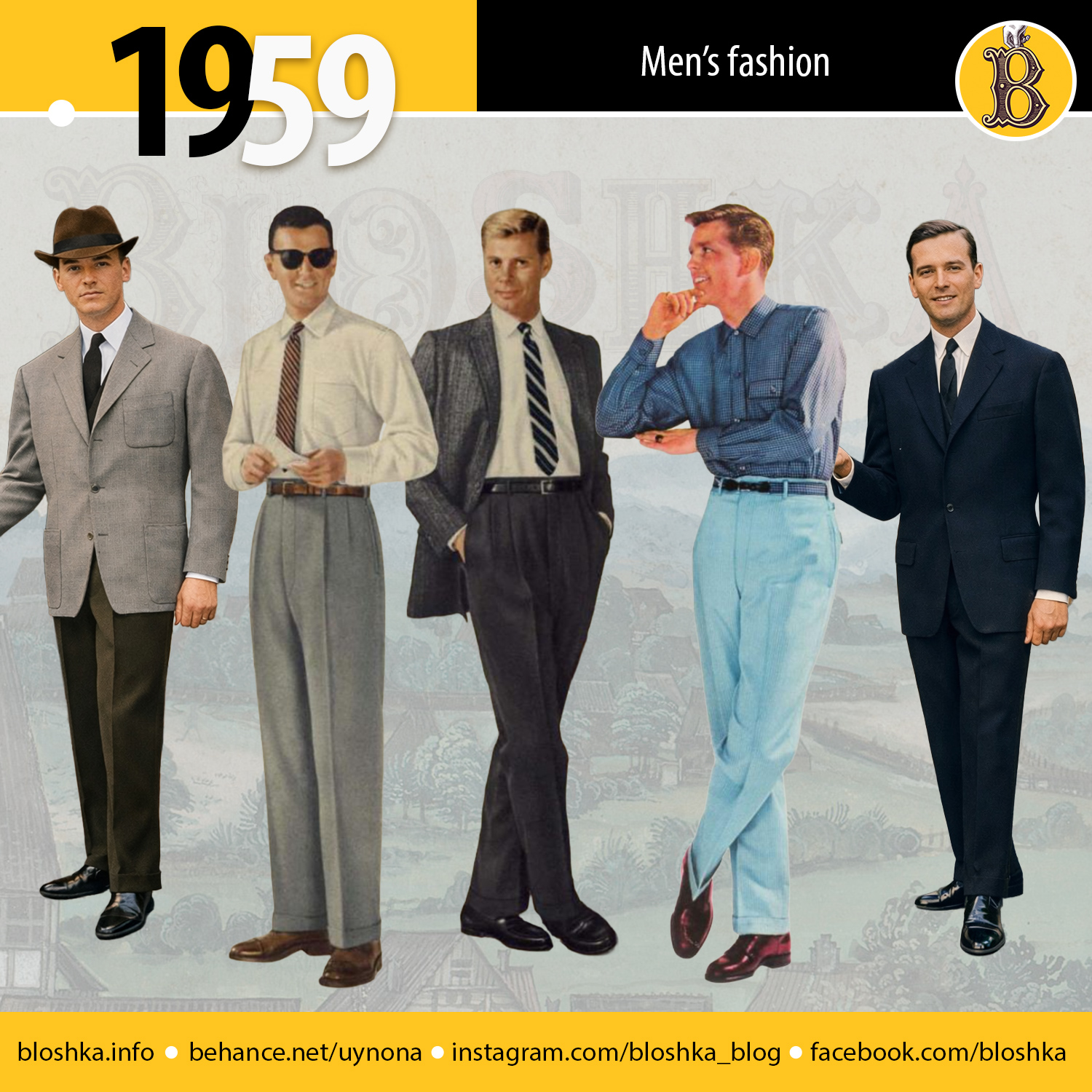
The 1950s marked a shift from the restrained practicality of the war years toward a more polished, prosperous and increasingly varied approach to menswear.
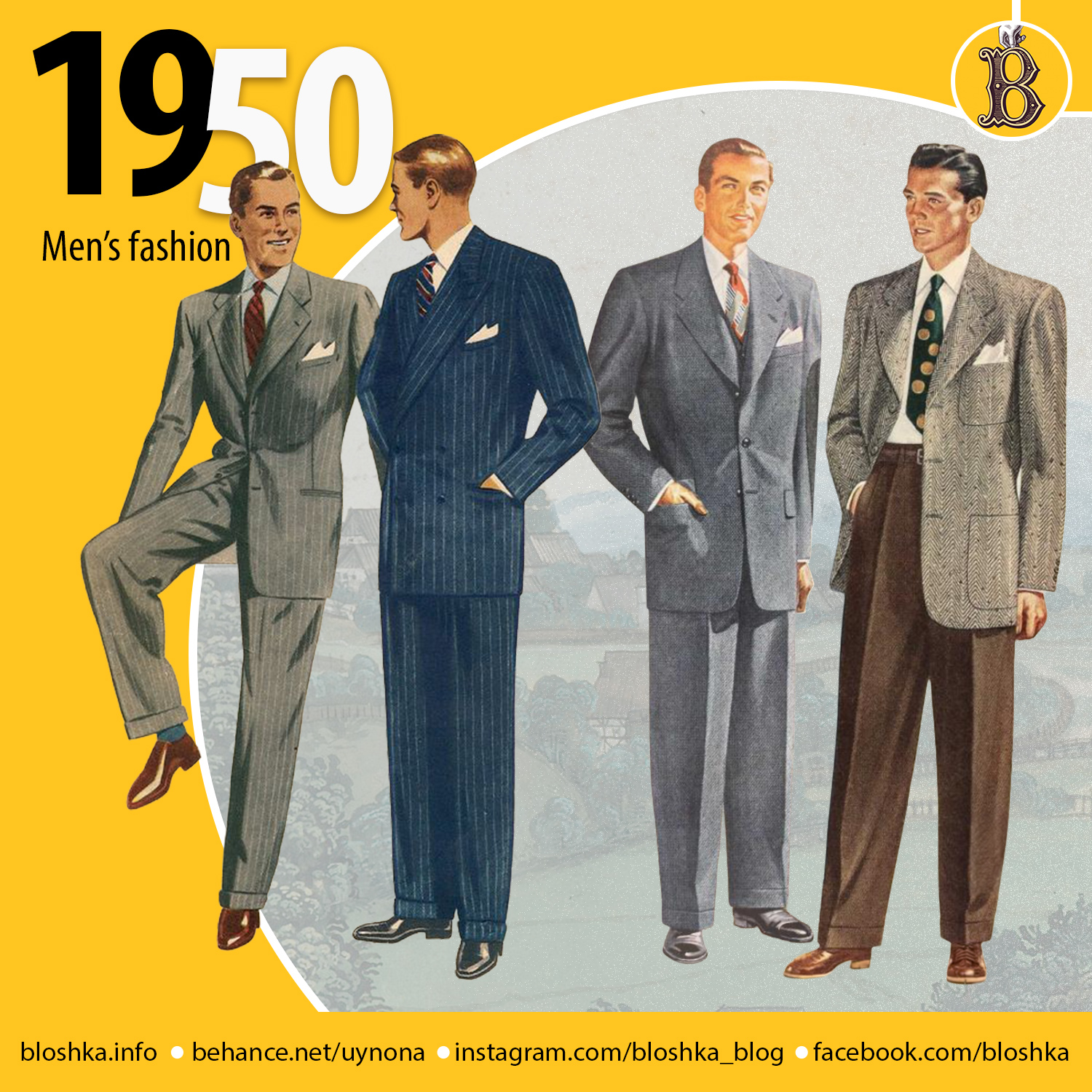
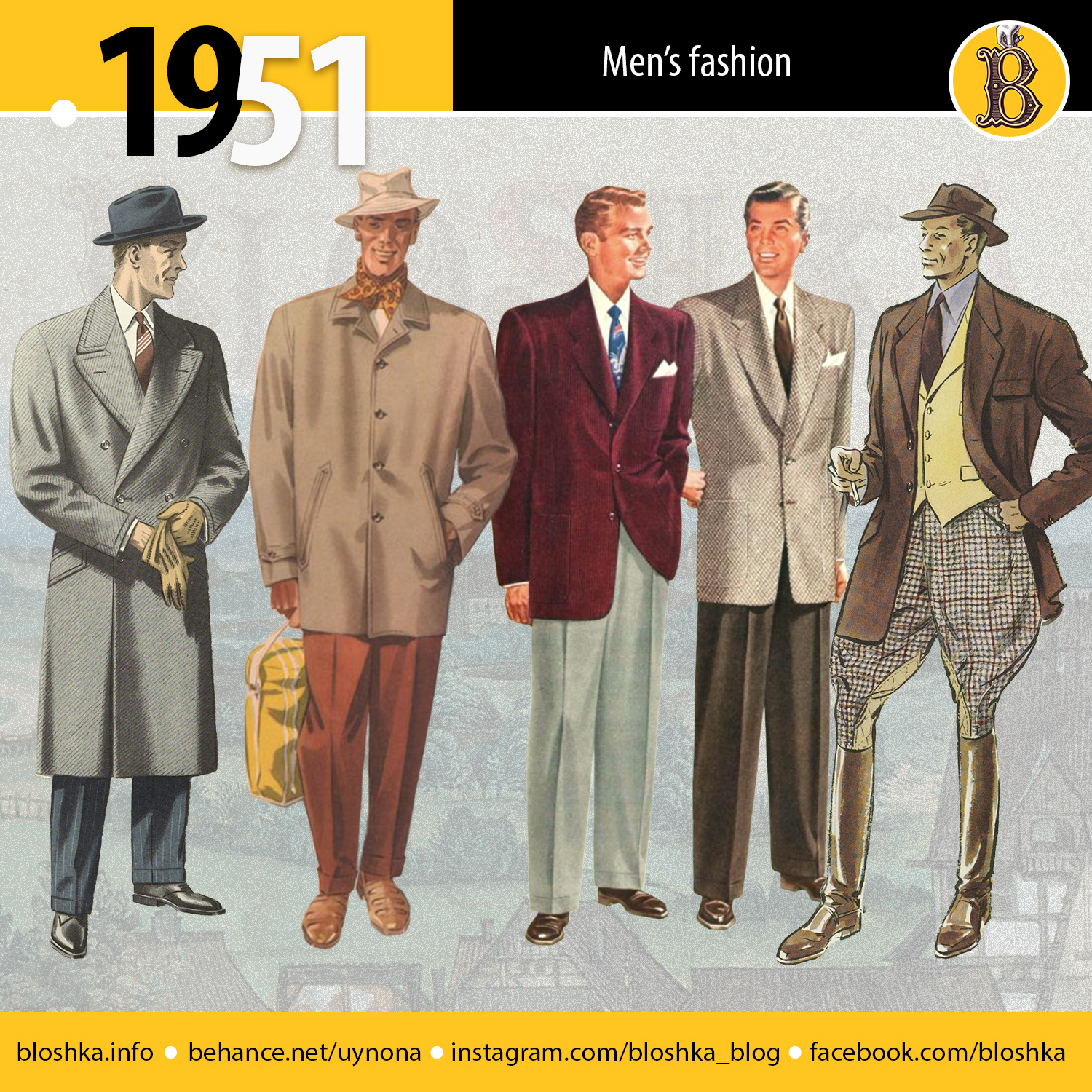
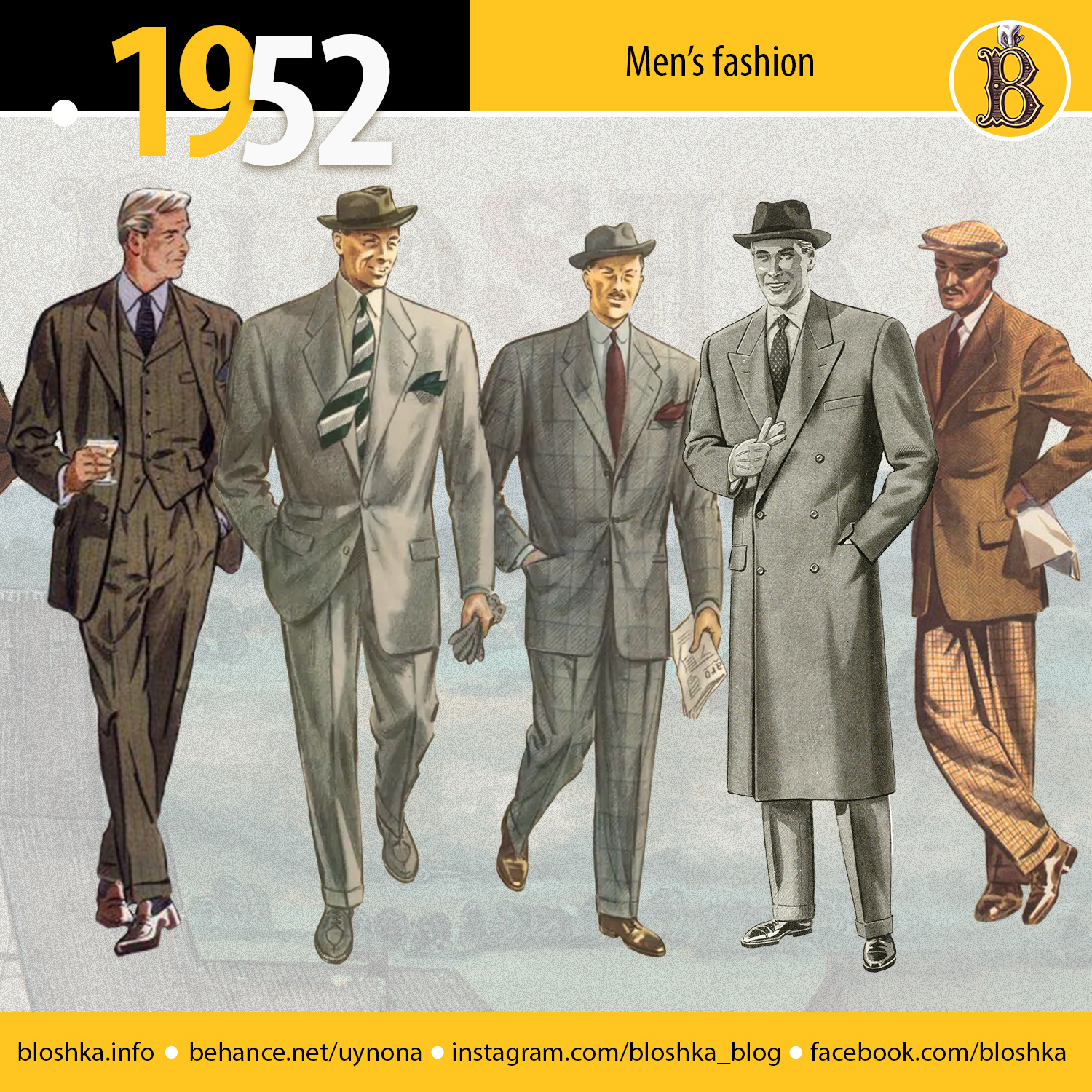
At the beginning of the decade, the broad silhouette of the late 1940s was still visible. Structured shoulders, generous lapels and high-waisted trousers with plenty of width through the leg created a confident and elegant look. Long overcoats, felt hats and carefully coordinated accessories remained an important part of the formal male wardrobe.
As the decade progressed, tailoring gradually became slimmer and cleaner. Lapels narrowed, trousers became less voluminous, and the overall silhouette moved toward the neat, controlled proportions that would define much of early 1960s menswear.
At the same time, casual clothing became increasingly important. Sports jackets worn with contrasting trousers, knitted polo shirts, short-sleeved shirts, loafers and lightweight summer clothing offered men more freedom outside formal settings.
Youth culture also began to shape fashion in a completely new way. Jeans, leather and suede jackets, T-shirts and casual shirts became strongly associated with rock ’n’ roll, cinema and a younger generation that wanted to dress differently from their parents. We explored this rock-inspired fashion of the 1950s in a separate post, with more detail about the key garments, influences and style icons of the period.
In Britain, the Teddy Boy movement created another instantly recognisable youth silhouette, combining sharply tailored jackets with narrow trousers, bold shoes and carefully styled hair. Teddy Boy fashion also had its own separate post, where we looked at the style in much greater detail.
A year-by-year journey through men’s fashion of the 1950s, based on authentic fashion illustrations, advertisements and clothing catalogues from the period.