Costume of the Italian Peninsula, 1581
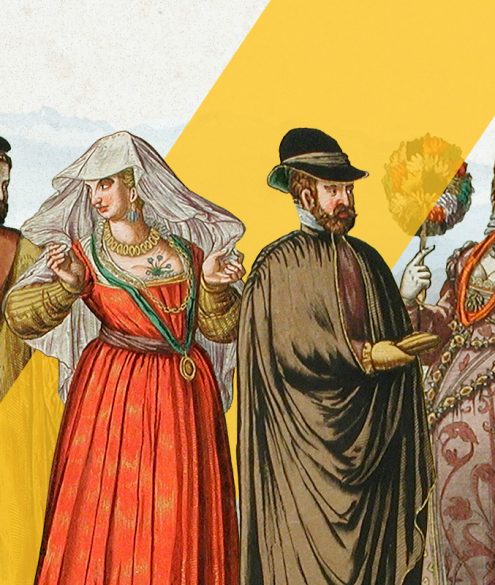
A journey through the clothing of the Italian peninsula at the end of the 16th century — from Rome and Venice to Padua, Florence, Siena, Milan, Bologna, Ferrara and Pisa.

A journey through the clothing of the Italian peninsula at the end of the 16th century — from Rome and Venice to Padua, Florence, Siena, Milan, Bologna, Ferrara and Pisa.
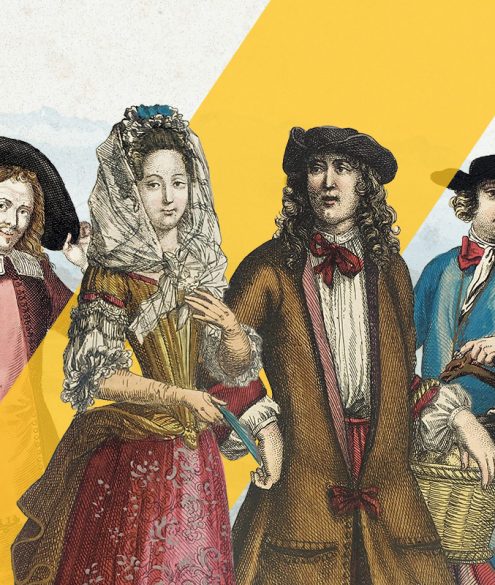
Fashion across social ranks in late 17th-century France By popular request, here is a look at how people from different social backgrounds were represented in late 17th-century France — from men and women of quality to peasants, shepherds, tradespeople, street vendors, a midwife, a financier and members of the clergy.
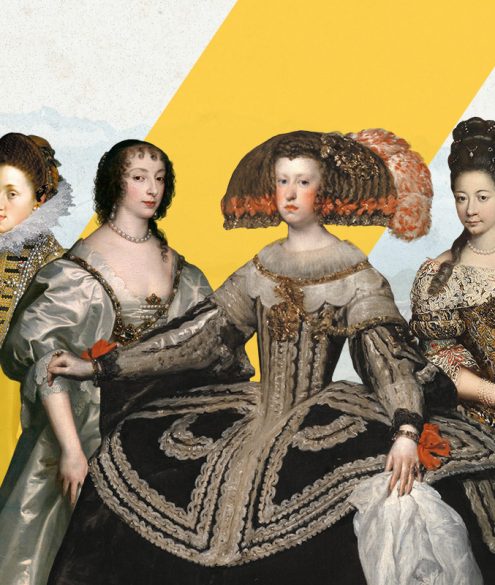
Women’s fashion through the 17th century The 17th century brought major changes to women’s dress, from the rigid and highly structured silhouettes of the late Renaissance to the softer, more fluid fashions of the mid-century, and finally to the elaborate court styles of the late 1600s.
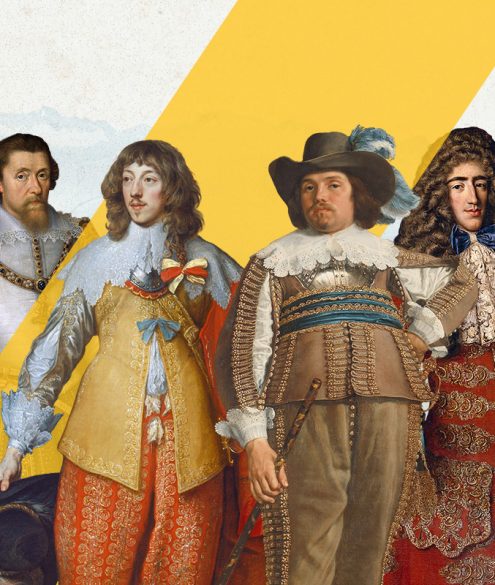
A century of dramatic changes in silhouette, proportion and decoration. At the beginning of the 1600s, men’s dress still carried many features of the late Renaissance:
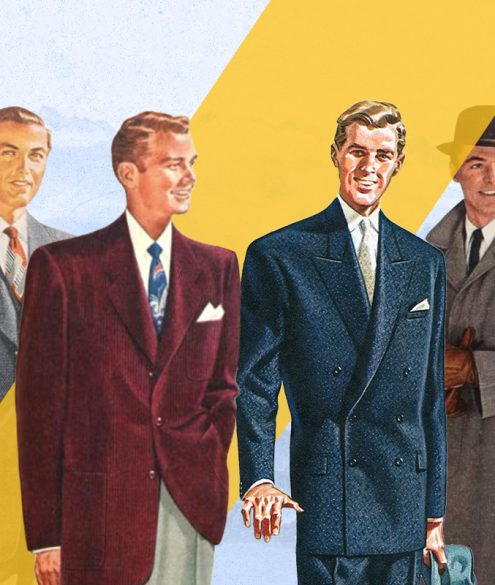
Men’s fashion through the years: 1950–1959 The 1950s marked a shift from the restrained practicality of the war years toward a more polished, prosperous and increasingly varied approach to menswear.

Men’s fashion through the years: 1940–1949 The 1940s were a decade of dramatic change, and men’s fashion reflected both the restrictions of wartime and the renewed optimism that followed.

Men’s fashion through the years: 1930–1939 The 1930s brought a return to a stronger, more structured masculine silhouette. Jackets became broader through the shoulders, waists were more defined, and trousers were cut high and full, creating the elegant proportions associated with the decade.

Men’s fashion through the years: 1920–1929. A year-by-year timeline of men’s style during a decade shaped by postwar change, modern leisure, and the growing influence of youth culture.

Le Chaperon à Bavolet is a fashionable headdress of the 16th century. To be more precise, this is a piece of headdress –

The “Zoot suit” is a men’s suit with high-waisted, wide-legged, tight-cuffed, pegged trousers, and a long jacket with wide lapels and wide padded shoulders.

What movies to see, to immerse yourself in the era? Films for the atmosphere, inspiration. Films based on real events, film adaptations of books, legends and just a fantasy about the past.

The wimple (also spelled whimple) was a very common head covering for women in the Middle Ages (c. 1200–1500). Wimples were light veils, usually made of linen or silk, that were fastened around the neck and up to the chin.

The Bycocket hat is a headdress with a pointed “nose” and brim curved back. This hat (most often) was made of felt and was popular among people with different social status –

Fauvism is the style of les Fauves (French for “the wild beasts”), a group of early 20th-century artists whose works emphasized painterly qualities and strong color over the representational or realistic values retained by Impressionism.

The Green veil is a fashion accessory introduced by French artist Élisabeth Vigée Le Brun (1755 – 1842). After the French Revolution, she left for Italy.

The Bertha collar is wide flat soft round (or semicircular) collar located on the shoulders from the neck to the décolleté.

The Crespine (Crespinette or Сauls) is a detail of a medieval headdress. Initially, these are hair nets on the sides of the face.

Moretta and Vizard are black oval masks from the 16th-18th centuries. Moretta is a Venetian mask, and Vizard is a French one.

An Escoffion was female medieval headwear which was popular during the Late Middle Ages (1250–1500). But it gained particular popularity in the 15th century.

The Sleeve puffs is sleeve supports, special pads on the sleeves to keep in shape. They gained popularity in 1820’s-1840’s. The pads were made of cotton or linen, stuffed with cotton wool, goose feathers or down.

The Ruff collar is a lingerie collar formed by pleats or gadroons. It is placed around the neck that it hides and highlights the face of the wearer.

The Turban has come into Western fashion from the East, since the time of the Crusades. But it was especially popular in fashion in the second half of the 15th century –

A choker is a close-fitting necklace worn around the neck. Chokers can be made of a variety of materials, including velvet, plastic, beads, leather, metal, such as silver, gold or platinum, etc.

A samovar (ru: самовар; literally “self-brewer”) is a metal container traditionally used to heat and boil water in Russia. Additionally, the samovar is well known outside of Russia and spread through the Russian culture to Eastern Europe, South-Eastern Europe, Iran, Afghanistan, the Kashmir region of India, the Middle East, Azerbaijan and is also known in some parts of Central Europe.

The Toque hat is a type of hat with a narrow brim or no brim at all. The crown of the hat was of different heights, and, depending on the fashion, was soft or upright.

The Fontange is a high headdress popular during the turn of 1680’s – 1710’s. Technically, fontanges are the assembly: bonnet with ribbon bows which supported by a wire framework called a commode.

Arcelet and Attifet. Two fashionable 16th century headdresses. An Arcelet or the French hood is characterized by a rounded shape, contrasted with the angular “English”

A ferronnière is a style of headband that encircles the wearer’s forehead, usually with a small jewel suspended in the centre.

We have a new post on Patreon about “Headdresses and Hairstyles”. Part 1: 1800 – 1809. https://www.patreon.com/bloshka_project Year by year. Each page is one year.

The Vertugadin or the farthingale is one of several structures used under Western European women’s clothing in the 15th – 17th centuries to support the skirts in the desired shape and enlarged the lower half of the body.

The Partlet is a fashion accessory of the 15th – 16th century. The Partlet was a sleeveless garment worn over the neck and shoulders, or to fill in a low neckline.

Place in art. Zaandam (Netherlands) by Claude Monet (1840 – 1926). In early June 1871, Monet left London for the Netherlands and traveled via Rotterdam to Zaandam.

A peascod belly is a type of exaggeratedly padded stomach that was very popular in men’s dress in the late 16th and early 17th centuries.

A zibellino, flea-fur or fur tippet is a women’s fashion accessory popular in the later 15th and 16th centuries. A zibellino, from the Italian word for “sable”, is the pelt of a sable or marten worn draped at the neck or hanging at the waist, or carried in the hand.

Sometimes it is very difficult to distinguish a TeaPot from a Coffee Pot and a Chocolate Pot …

Chemise à la Reine (The Chemise Dress) In the 1780s, the Chemise à la Reine — often called the chemise dress — came into fashion in France and quickly spread across Europe.

Impressionism (fr. impressionnisme – “impression”) is one of the largest trends in art in the last third of the 19th century.

Briefly about hairstyles and headdresses 16th century, Holy Roman Empire.

Briefly about hairstyles and headdresses 16th century, Britain (Great Britain)

Women’s casual wear, 1890’s – 1930’s. Casual wear – the clothes for every day, especially comfortable, practical, within the fashion, but without excesses.

Jewelry illustrations by Larry Austin (1899-1981) for Miriam Haskell. Late 1930s – early 1940s

Briefly about hairstyles and headgear 1900’s – 1970’s (Russian Empire, Soviet Union).

Flowering Orchards is a series of paintings by Vincent van Gogh (1853 — 1890) executed in Arles, in southern France in the spring of 1888.

1950’s Brief history of fashion in pictures. Women’s and men’s, headdresses and hairstyles, underwear, swimsuits and bathing suits

Men’s headdresses and hairstyles. 1600s – 1690s. Brief history of fashion in pictures.

1940’s Brief history of fashion in pictures. Women’s and men’s, headdresses and hairstyles, underwear, swimsuits and bathing suits

Fashion accessory is a wardrobe detail, without which it is impossible to imagine of the era. Some accessories were practical, others covered up the flaws or simply made the outfit “decent”, and still others were just beautiful knick-knacks.

Headgear, headwear or headdress is the name given to any element of clothing which is worn on one’s head. Part 2 Headgears of the Middle Ages.


