Costume of the Italian Peninsula, 1581
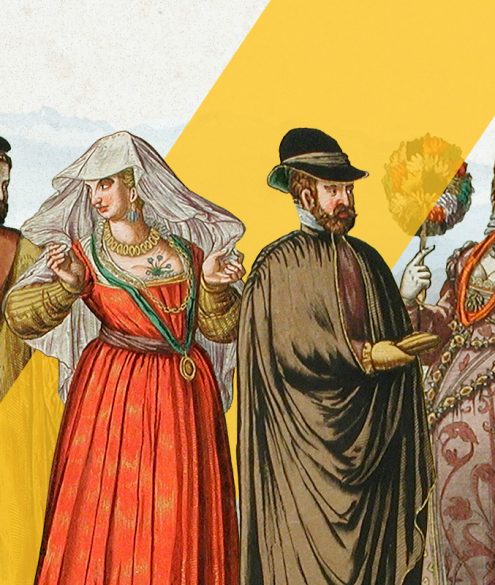
A journey through the clothing of the Italian peninsula at the end of the 16th century — from Rome and Venice to Padua, Florence, Siena, Milan, Bologna, Ferrara and Pisa.

A journey through the clothing of the Italian peninsula at the end of the 16th century — from Rome and Venice to Padua, Florence, Siena, Milan, Bologna, Ferrara and Pisa.
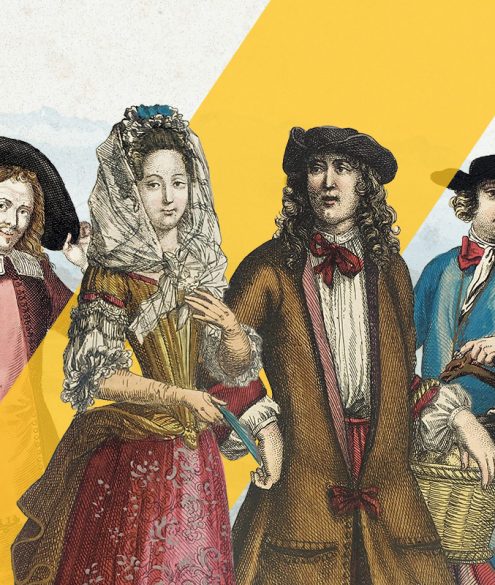
Fashion across social ranks in late 17th-century France By popular request, here is a look at how people from different social backgrounds were represented in late 17th-century France — from men and women of quality to peasants, shepherds, tradespeople, street vendors, a midwife, a financier and members of the clergy.
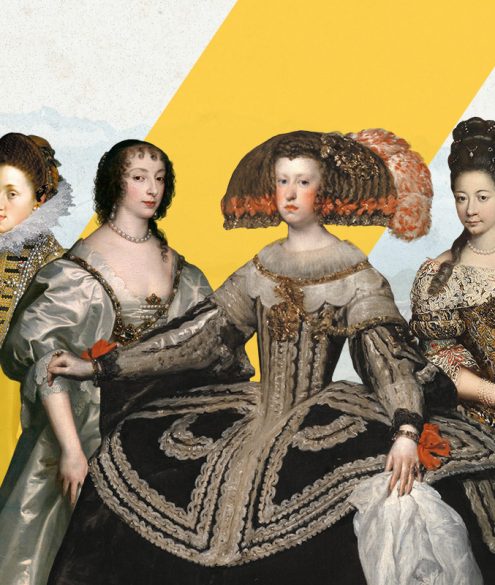
Women’s fashion through the 17th century The 17th century brought major changes to women’s dress, from the rigid and highly structured silhouettes of the late Renaissance to the softer, more fluid fashions of the mid-century, and finally to the elaborate court styles of the late 1600s.
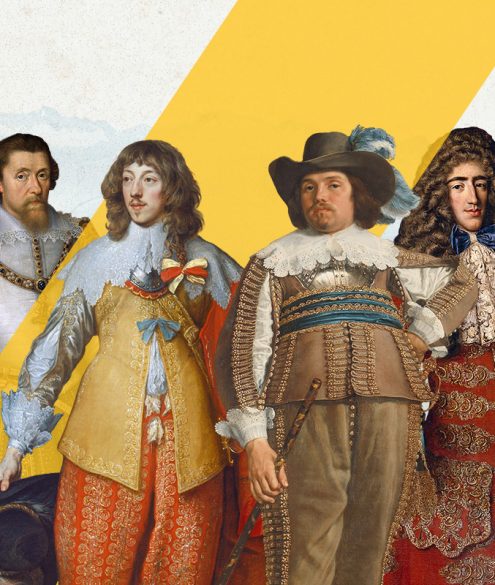
A century of dramatic changes in silhouette, proportion and decoration. At the beginning of the 1600s, men’s dress still carried many features of the late Renaissance:
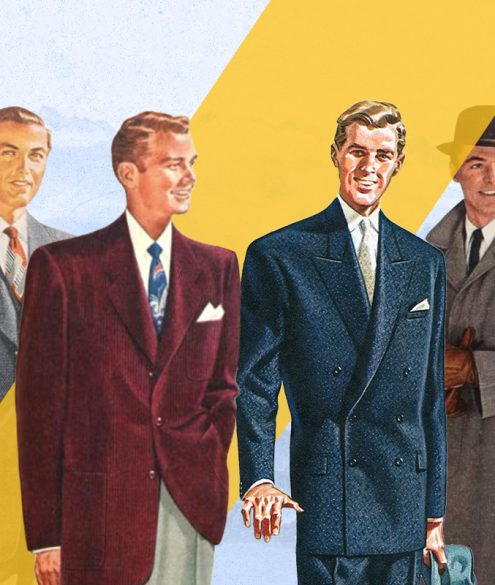
Men’s fashion through the years: 1950–1959 The 1950s marked a shift from the restrained practicality of the war years toward a more polished, prosperous and increasingly varied approach to menswear.

Men’s fashion through the years: 1940–1949 The 1940s were a decade of dramatic change, and men’s fashion reflected both the restrictions of wartime and the renewed optimism that followed.

Men’s fashion through the years: 1930–1939 The 1930s brought a return to a stronger, more structured masculine silhouette. Jackets became broader through the shoulders, waists were more defined, and trousers were cut high and full, creating the elegant proportions associated with the decade.

Men’s fashion through the years: 1920–1929. A year-by-year timeline of men’s style during a decade shaped by postwar change, modern leisure, and the growing influence of youth culture.

The Redingote is a long dress-coat, fitted overcoat with a flared skirt, that came into vogue as an adaptation of a Riding Habits.

The Braies (fr. Braies; de. Bruoch; pt. Bragas; ru. Брэ; da. Brog; no. Brok) are a type of panties, men’s undergarment.

The Giubberello is a short sleeveless gown for men with open sides. This type of clothing was popular during the Renaissance in Italy (modern territory) in the 15th and early 16th centuries.

The surcoat (French: surcot) is an outer garment commonly worn during the Middle Ages. Its name derives from Old French, meaning “over the cotte.” The surcoat first appeared as a men’s garment during the Crusades, when it was worn over armor to protect it from the sun and heat.

We have a new post on Patreon about 19th century fashion. 19th century. Men’s and Women’s headdresses fashion… here 19th century.

The Umbrella existed as far back as the 11th century BC. It is this time that is considered the time of the invention of the umbrella.

The Robe à l’Anglaise or the Close-bodied gown was a women’s fashion of the 18th century. This type of gown came into French fashion (and throughout the world, everywhere except English it calls “à l’Anglaise”) from England and featured a fitted bodice.

The Robe à la Polonoise (or Polonaise; ru. Роб а ля Полонез; pl. Poloneska; es. Polonesa) is a woman’s gown of the later 1770s and 1780s.

The Frilled veil or Cruselers (de. Krüseler) – this woman’s headdress, which was fashionable in Europe in the 14th – 15th centuries.

The Wulsthaube or Steuchlein is a German female headdress derived from a bonnet. Steuchlein consists of Schleier (veil), Unterhaube (undercap) and Wulst (bulge) – a padded cushion at the back of the head.

The cotte and the cotehardie (English: kirtle) were medieval garments worn over a chemise. They were long, fitted dresses with narrow sleeves.

Japanese fan in western fashion. In the second half of the 19th century, Western fashion entered Japan, but Japanese art also came to the West (mainly Europe).

The Doublet (fr. Pourpoint; ru. Дублет; de. Wams; es. Jubón; it. Farsetto) is a men’s snug-fitting jacket . The Doublet appears in the mid-14th century, and comes from the clothing worn by knights under armor.

Bangs or a fringe (de. Pony; fr. Frange; ru. Чёлка; es. Flequillo; it. Frangia), are part of the hairstyle; front hairline covering the forehead, usually just above the eyebrows, though can range to various lengths.

The houppelande (Spanish: hopalanda; Italian: pellanda) is an overdress characterized by a long, voluminous body and wide, flaring sleeves. It was worn by both men and women in Europe from the late 14th century through the 1430s.

The Mobcap (fr. Bonnet à la Dormeuse) is a round, gathered or pleated bonnet consisting of a caul to cover the hair, a frilled or ruffled brim, and a ribbon band.

The Zimarra (fr. Marlotte; nl. and eng. Vlieger; es. Zamarra or Ropa) is a woman’s coat, overgown. The name “Zimarra” may have come from Spain or Portugal (Zamarra), later the same name was given to men’s religious clothing (eng.

The robe à tassel was a type of overdress fashionable in Europe in the 15th century. This style is sometimes referred to as a Burgundian gown, although this term is not entirely accurate, as 15th-century Burgundian fashion included a variety of gown styles.

The Delphos gown is a finely pleated silk dress first created in about 1907 by French designer Henriette Negrin and her husband, Mariano Fortuny y Madrazo (1871–1949).

The Aquamanile (plural aquamanilia or simply aquamaniles; from lat. “aqua” – water and lat. “manus” – hand) – is a washstand, a ewer or jug-type vessel for washing hands in the form of an animal or human, sometimes several figures.

The Jerkin is a man’s short close-fitting jacket, without sleeves, worn over the doublet in the sixteenth and seventeenth centuries. A Jerkin is outerwear, often made of leather, velvet and other warm fabrics.

The Gable hood (or English hood or gable headdress) is an English headdress from the first half of the 16th century.

We have a new post on Patreon about “Headdresses and Hairstyles”. Part 4: 1830 – 1839. www.patreon.com/bloshka_project Year by year. Each page is one year.

The Little Black Dress. (fr. La Petite robe noire) is a fashionable dress designed by Gabrielle Chanel in 1926. Many historians argue that before Chanel, only widows wore black and she revolutionized fashion.

Hennin — Dutch henninck “cock”, French hennin — is a tall women’s headdress of the 15th century. It was usually made on a frame of whalebone, metal, starched linen or stiff paper.

The Banyan (through Portuguese banian and Arabic بنيان, banyān, meaning “merchant”) is a type of men’s homewear, a robe worn over clothing.

The Fleur d’oranger (eng. The Orange blossom) – snow-white flowers of an orange tree; borrowed from French in many languages. The Fleur d’oranger is a traditional part of the bride’s wedding headpiece, such as a wreath, bridal bouquet, or other jewelry for the bride.

Pluderhosen or Upper hose (also Upper hosen) – short, baggy trousers for men made of fabric, usually velvet, with vertical slits showing the lining, hence they were also called “filled trousers”, chausse à la gigotte, chausse bouffante, etc.

Engageantes are false sleeves (or rather cuffs), worn with women’s clothing. It is difficult to say when the removable sleeves or cuffs appeared, but in the 17th century, lace trim on underwear was a very prominent feature of women’s and men’s fashion.

The Peineta is is a decorative comb, a hair ornament, consists of a convex body and a set of teeth that affix it to hair worn in a bun.

1890’s Brief history of fashion in pictures. Women’s and men’s, headdresses and hairstyles, underwear, wedding, sportswear, swimsuits and bathing suits

The spoon bonnet is a type of headwear that falls somewhere between a house bonnet and a hat. Bonnets were popular during the first half of the 19th century, but by the 1850s their practicality had begun to fall out of fashion.

The Mantua is style of gown, the late 17th – early 18th cent. Originally a loose gown, the later mantua was an overgown or robe typically worn over stays, stomacher and a petticoat.

The Podstakannik (ru. подстаканник, literally “thing under the glass”), or tea glass holder, is a holder with a handle, most commonly made of metal that holds a drinking glass (stakan).

The Robe à la Française is an 18th century women’s gown style. This is a set of different pieces of clothing:

Epergne is a type of table centerpiece that is usually made of silver or cristal but may be made of any metal or glass or porcelain.

1970’s Brief history of fashion in pictures. Women’s and men’s, headdresses and hairstyles, underwear, swimsuits and bathing suits

The Carnet de bal, the programme du bal or the Dance card, is a little booklet, usually with a decorative cover, which lists dance titles, and provides a place for a lady to write in the name of the gentleman who promises to partner her for each specific dance.

Flowers in hair, in hairstyles and with a headdress are probably the first thing that ancient people began to decorate themselves with.

Ancient Earrings A brief history of earrings. Part 2. From Minoan civilization to Western Asia

A porte-bouquet, also known as a posy holder or tussie-mussie, is an accessory designed to hold a small bouquet of flowers.

The Polka dot is a pattern consisting of an array of large filled circles of the same size. One of the first mentions of the term “Polka dot”

The justacorps (or justaucorps, fr.) is a long, knee-length coat worn by men in the second half of the 17th century and throughout the 18th century.

The Сravat is a neckband, the forerunner of the modern tailored necktie and bow tie, originating from a style worn by members of the 17th century military.

A Shawl is an accessory, a piece of clothing that covers the shoulders and arms, the upper body. In many languages, the word “Shawl”

The Beach Pajamas are women’s summer leisure wear. Beach pajamas, which look like palazzo pants (wide-legged pants) with an attached sleeveless top, sometimes supplemented with a light robe or jacket.

The Girdle is a form-fitting undergarment with garters. Distinguishes a Girdle from a Garter belt in that it is wide, reminiscent of a tight-fitting short skirt, hides the lower torso, extending below the hips, and worn often to shape or for support.

A brief history of earrings. Part 1. From Ancient Egypt to Byzantium Rus: Серьги. Часть 1 Краткая история от Древнего Египта до Византии.

