Costume of the Italian Peninsula, 1581
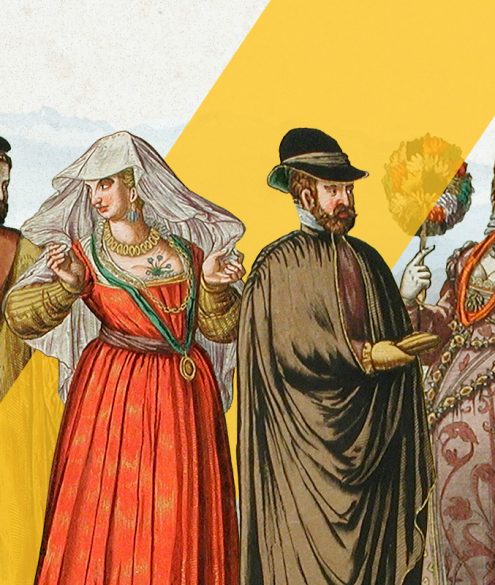
A journey through the clothing of the Italian peninsula at the end of the 16th century — from Rome and Venice to Padua, Florence, Siena, Milan, Bologna, Ferrara and Pisa.

A journey through the clothing of the Italian peninsula at the end of the 16th century — from Rome and Venice to Padua, Florence, Siena, Milan, Bologna, Ferrara and Pisa.
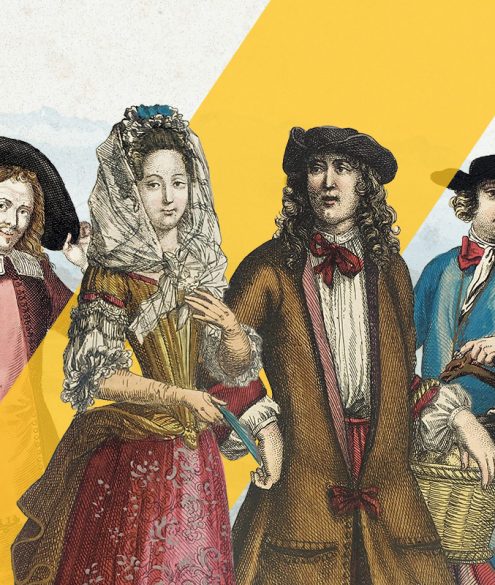
Fashion across social ranks in late 17th-century France By popular request, here is a look at how people from different social backgrounds were represented in late 17th-century France — from men and women of quality to peasants, shepherds, tradespeople, street vendors, a midwife, a financier and members of the clergy.
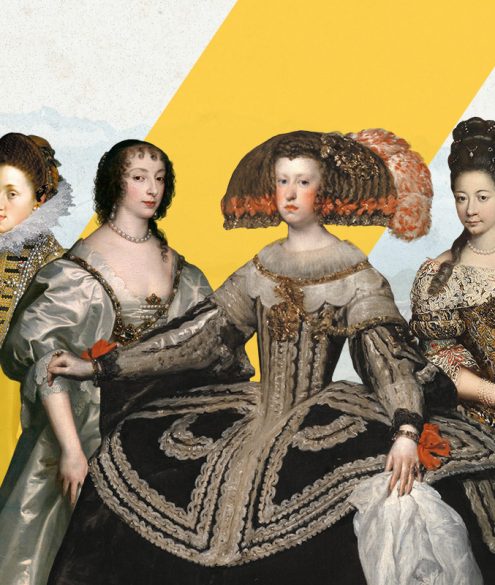
Women’s fashion through the 17th century The 17th century brought major changes to women’s dress, from the rigid and highly structured silhouettes of the late Renaissance to the softer, more fluid fashions of the mid-century, and finally to the elaborate court styles of the late 1600s.
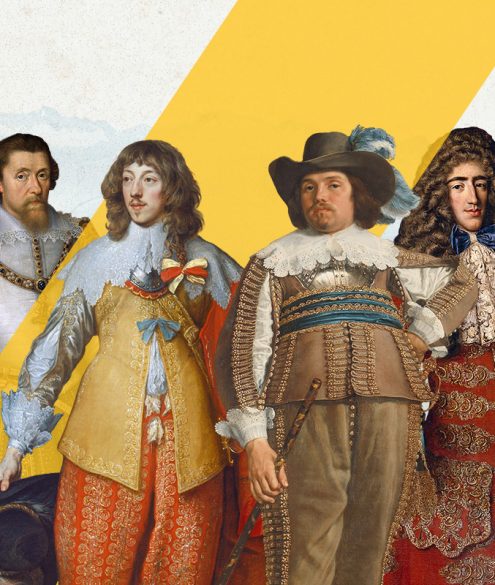
A century of dramatic changes in silhouette, proportion and decoration. At the beginning of the 1600s, men’s dress still carried many features of the late Renaissance:
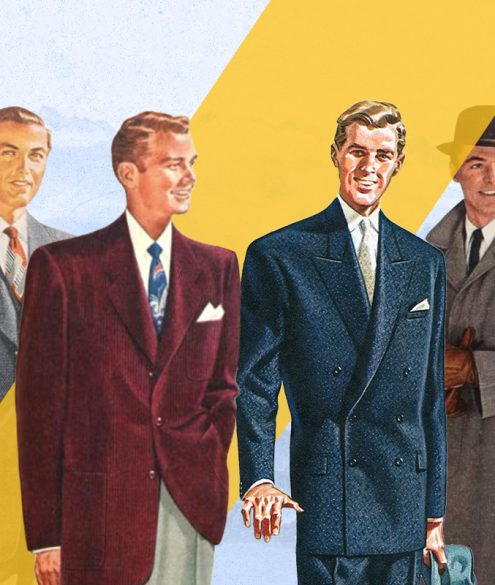
Men’s fashion through the years: 1950–1959 The 1950s marked a shift from the restrained practicality of the war years toward a more polished, prosperous and increasingly varied approach to menswear.

Men’s fashion through the years: 1940–1949 The 1940s were a decade of dramatic change, and men’s fashion reflected both the restrictions of wartime and the renewed optimism that followed.

Men’s fashion through the years: 1930–1939 The 1930s brought a return to a stronger, more structured masculine silhouette. Jackets became broader through the shoulders, waists were more defined, and trousers were cut high and full, creating the elegant proportions associated with the decade.

Men’s fashion through the years: 1920–1929. A year-by-year timeline of men’s style during a decade shaped by postwar change, modern leisure, and the growing influence of youth culture.

We have a new post on Patreon about “Headdresses and Hairstyles”. Part 3: 1820 – 1829. www.patreon.com/bloshka_project Year by year. Each page is one year.

Chausses (eng. Hose) are any of various styles of men’s clothing for the legs and lower body, worn from the Middle Ages through the 16th century, when the style fell out of use in favor of breeches and stockings.

The Tricorne hat (fr. Tricorne) also the cocked hat – is headdress with the brim folded so that they form three corners.

The Аllonge (also Peruke) is a man’s headdress, wig with long wavy curls. Wigs in men’s fashion have been known for a long time, but they became ubiquitous in the middle of the 17th century.

A Crinoline is a stiff or structured petticoat designed to hold out a woman’s skirt, popular in the mid-19th century. Originally, crinoline was described as a stiff fabric made of horsehair (“crin”) and cotton or linen which was used to make underskirts and as a dress lining.

We have a new post on Patreon about “1800’s – 1890’s fashion” https://www.patreon.com/bloshka_project 19th century fashion by decade. Men’s and women’s fashion.

The Permanent wave machine. In the late 1900s, the Permanent wave was invented by Karl Nessler, and in February 1910 he patented a special Permanent wave machine.

The Tea gown (also Tea dress) is type of lady’s home dress, loose-fitting dress, but sometimes belted. The lady wore a Tea gown at home, with her family and closest friends, but not for special occasions, for example, receiving guests or a dinner party.

The Hobble skirt (de. Humpelrock; nl. Strompelrok) is a skirt with a narrow hem. Hobble skirts were a fashion trend that peaked between 1908 and 1914.

The Plis Watteau is pleat on the back, fashionable in the 18th century. The Plis Watteau was named after the artist Jean-Antoine Watteau (1684 – 1721).

The Chantilly lace (fr. La dentelle de Chantilly) is a handmade bobbin lace named after the city of Chantilly (France). In the 17th century, the Duchesse de Longueville organised the manufacture of lace at Chantilly.

Rococo painting. 10 artists. Rococo’s artistic style was popular in Europe in the 1720s – 1780s. At the heart of the style:

The Gigot sleeve or the leg-of-mutton sleeve, was named for its resemblance to a sheep’s hind leg: wide at the top and narrow at the bottom.

Types of glasses. The first eyeglasses were made in Northern Italy, most likely in Pisa, by about 1290 (or 1284). Initially, glasses were worn on the nose or held in the hand.

The Hanging pockets are separate small bags or pouches. In the 15th-18th centuries, pockets were an independent accessory for a woman’s costume.

The Pamela hat (also Pamela bonnet) or fr. Chapeau à la Paméla, described a type of straw hat or bonnet popular during the 1780’s – 1810’s.

The Boater (also straw boater, basher, skimmer, The English Panama, cady, katie, canotier, somer, sennit hat) is a semi-formal straw hat.

The Stomacher is a decorated triangular panel as part of a corset. The Stomacher put on a corset and fastened with pins.

The Swiss waist is fashionable accessory; bodice (corselet; corsage) or belt. The accessory was inspired by traditional Swiss women’s clothing. The Swiss waist was popular in the mid-19th century and returned for a second time as a belt at the turn of the 19th and 20th centuries.

We have a new post on Patreon about “1700’s – 1790’s fashion” https://www.patreon.com/bloshka_project 18th century fashion by decade. Men’s and women’s fashion.

The Tournure (or es. Polisón / ru. Турнюр / eng. Bustle / de.Tournüre) is s framework supporting the skirts. The Tournure was popular in the 1870s and 1880s.

The Babette is a hairstyle featuring a large bouffant (puff) on the top of the head. The style got its name from the 1959 film Babette Goes to War, starring Brigitte Bardot.

The Robe Volante (also Robe Battante, Contouche) – fashionable style of of loose-fitting home dress in the 1720’s – 1730’s. The Robe Volante has a plis Watteau on the back.

The Half hat is a headdress, a style of a hat, that sits on the back of the head, covering the top of the head.

The Brunswick gown, or simply Brunswick, was an 18th-century two-piece woman’s gown consisting of a jacket and a skirt, sometimes worn with a vest.Its main feature was a fitted jacket with a hood and two-part sleeves, usually made of the same fabric and color as the skirt.There were many variations of the Brunswick:

The “New Look” is the name given in 1947 by the editor-in-chief of Harper’s Bazaar, Carmel Snow, to the silhouette created by the couturier Christian Dior for the “Corolle” collection.

The Snood is a type of headgear designed to hold the hair in a cloth or yarn bag. The Snood is a type of hairnet, only slightly thicker.

The Muff is a fashion accessory – handwarmer, usually made of a cylinder of fur or fabric with both ends open for keeping the hands warm.

The Pet-en-l’air is part of the 18th century women’s costume. It was an elongated jacket, fitted, but with a free back and the Plis Watteau.

In the early 20th century, women’s skirts began to shorten, but going out with bare legs was still considered indecent. Ultra-fashionable women started painting patterns directly onto their legs, imitating the look of stockings.

The Babydoll is a short, sleeveless or lantern sleeves, loose-fitting nightgown or negligee, intended as nightwear for women. Sometimes the shirt is complete with short pants (closer fitting briefs) with elastic waist and legs.

The “Marcel Waves” is a type of hair styling that appeared at the end of the 19th century and reached its peak in popularity at the 1910’s – 1930’s.

The Panier or Pannier (also “side hoops”) from French – “basket”. This is a frame made of willow or steel rods or whalebone plates to keep the skirt fashionable.

What movies to see, to immerse yourself in the era? Films for the atmosphere, inspiration. Films based on real events, film adaptations of books, legends and just a fantasy about the past.

1960’s Brief history of fashion in pictures. Women’s and men’s, headdresses and hairstyles, underwear, swimsuits and bathing suits

The Teddy Boy is a subculture in the 1950’s – 1960’s in Great Britain, which experienced a revival several times in the 1970’s and 1990’s.

The kokoshnik is a traditional Russian women’s headdress, known for its wide variety of shapes depending on the region: round, pointed, cylindrical, and more.

The Chaperon is a headdress very popular in the Middle Ages. Cloaks with hoods were still in ancient Rome, they were called ‘Lacerna’

The Baby walker (de. Lauflernhilfe, fr. Trotteur, ru. Ходунки, es. Andador) is device that can be used by infants who cannot walk on their own to move from one place to another.

The gorget is a fashionable accessory—a high collar that covers the neck, ears, and part of the hair. It was popular in the 13th–15th centuries.

We have a new post on Patreon about “Headdresses and Hairstyles”. Part 2: 1810 – 1819. www.patreon.com/bloshka_project Year by year. Each page is one year.

The Oxford Bags is a type of trousers with extra-wide legs. Oxford bags were a loose-fitting baggy form of trousers. In 1920’s – 1930’s they were popular among Oxford students.

The Calash bonnet (or hood) is a headgear from the last quarter of the 18th century to the beginning of the 20th century, also called the “Bashful Bonnet” or Calèche.

The So-Called “Swirling Hat” and the Problem of Naming Roll Headdresses of the 15th Century The headwear sometimes described in modern writing as the “Swirling hat”, “Rings of Saturn”, or “roll hat” refers to a type of layered circular headdress visible in European art of the 15th and early 16th centuries.

The Double apron (de. Doppelshürz) – is domestic garment, a two-sided apron that looks more like a loose dress. This apron was used for various household chores and was popular in the 15th and 16th centuries.

The Plus fours (or Plus-fours) are breeches or trousers that extend 4 inches (10 cm) below the knee (and thus four inches longer than traditional knickerbockers, hence the name).

The Spencer is a short fitted jacket, without basque, only going down to mid-back, with long sleeves. It’s origin is attributed to an English lord, George Spencer, who allegedly burned his coat by warming himself too close to the fireplace.

The Charlotte (fr. Charlotte (chapeau)) is a bonnet made of cambric or muslin, decorated with ribbons and tied under the chin.

